Comparison
If you are shortlisting MaintainX alternatives in 2026, the market has moved. Autodesk bought MaintainX in May 2026 for around $3.6 billion, which has reopened procurement questions about data residency, roadmap direction and long-term pricing. At the same time, European asset-heavy operators (cleaning contractors, facility managers, industrial fleets) increasingly need CMMS software that connects to the machine itself, not just the work order about it. That combination is where alternatives to MaintainX have a real reason to exist.
This comparison covers seven credible options, the honest tradeoffs (including where ToolSense is still catching up) and one case where MaintainX is still the right answer. Skim the table below, then jump to what fits your operation.
MaintainX alternatives at a glance
| Platform | Live OEM data | IoT / sensors | Multi-brand robots | Asset financials | Offline-first mobile | EU data residency | DGUV compliance | Pricing |
|---|---|---|---|---|---|---|---|---|
| ★ToolSense7/7Mixed EU fleets | 18+ OEMs | IoT connection | RoboHub, 15+ brands | Native | WatermelonDB + QR + NFC | EU / Austria | Automated lab sync | Quote / demo |
| MaintainX1/7Mobile-first work orders | Sensors add-on | US-only | Generic reminders | $0 / $20 / $65 per user/mo | ||||
| Limble0/7Building maintenance | 3rd-party sensors | Read-mostly cache | AWS Milan | US/ISO-framed | ~$28 / $55–69 per user/mo | |||
| Fiix (Rockwell)1/7Multi-site industrial | Via Rockwell | Not disclosed | Quote | |||||
| UpKeep1/7Small mobile teams | DataHub add-on | Not disclosed | Per user (scales aggressively) | |||||
| Fracttal One3/7Enterprise EAM | Own IoT hardware | Fracttal Sense | Madrid HQ, region undisclosed | ISO-framed | Quote | |||
| Timly2/7Asset tracking | Tracking only | BLE/GPS trackers | Germany (OVHcloud) | DGUV/UVV native | €195 / €495 flat monthly |
The one-line verdict
Choose a MaintainX alternative if any of these apply: your assets have live machine data you want to use (cleaning robots, connected floor scrubbers, telematics-equipped machines); your data must stay in the EU; you run leased or rented equipment and need financial lifecycle on the asset; your team is subject to DGUV V3, UVV or E-check obligations. Stay on MaintainX if: your operation is a mobile-first frontline maintenance team, US-based, on non-connected assets, that just needs the best work-order app on the market.
Why teams look for a MaintainX alternative
We reviewed roughly 200 Capterra and G2 comments and cross-referenced them with the reasons DACH operators cite most often on procurement calls. Five patterns recur:
1. US-only data hosting. MaintainX's own trust documentation lists 24 subprocessors, all US-based, with EU-to-US transfers handled via Standard Contractual Clauses. That is disqualifying for German public administration, healthcare, ecclesiastical institutions and a growing share of DACH industrial operators. It is the single most common reason we see MaintainX drop out of European shortlists in 2026.
2. Assets are treated as records, not machines. MaintainX will happily attach a work order to an asset. What it will not do is pull live runtime, battery, location, utilisation or error codes from that asset's manufacturer cloud. If your maintenance triggers depend on real usage (hours run, kilometres driven, battery cycles, error thresholds), you end up bolting on external telematics tools and re-keying data by hand.
3. Per-user pricing escalates. MaintainX's transparent PLG pricing is a genuine strength for small teams. It becomes a cost driver as you add technicians, contractors, requesters and site managers, and as advanced features (IoT, SSO, CoPilot, advanced reporting) move into higher tiers.
It is a great tool but the cost creeps every time we add a use case. IoT, SSO, better reports all live in the top tier, and you find yourself paying $65 per user before you know it.
4. No native asset financials. Leasing, rental, warranty, service-contract, depreciation and cost-centre modelling on the asset itself is thin or absent. Operations running mixed owned, leased and rented equipment usually need this modelled natively, not exported to a spreadsheet.
5. No DGUV / UVV native workflow. The German statutory safety-test framework (DGUV V3, UVV, E-check) is not native in MaintainX. Teams that need automated statutory workflows connected to certified inspection labs end up on separate point tools like Timly or a dedicated compliance product.
MaintainX is great for the mobile team but it does not know anything about our leased fleet, and we still ended up in Excel for DGUV. We are looking at ToolSense to consolidate.
We evaluated MaintainX seriously in early 2026. It fell out of the shortlist when procurement flagged US-only hosting and we saw the SCC-only transfer mechanism on the trust page.
Work orders and preventive maintenance are excellent. Where we struggled is the leased-equipment side: depreciation, warranty windows, cost-centre allocation. All of that ended up in a separate spreadsheet, which defeated the purpose of consolidating tools.
The mobile app is genuinely the best in the category. Our issue is the machines: none of our connected floor scrubbers or automated cleaners have a live data feed into MaintainX, so we still have three OEM portals open on the same laptop.
Worth naming what MaintainX does not deserve criticism for. It has a strong mobile experience, a real review-site presence (~891 G2 reviews at 4.8 as of July 2026) and, post-Autodesk, a credible long-term roadmap.
For a broader view of the category, see our roundup of the best equipment management software. MaintainX is only one option in a wider field.
MaintainX overview
MaintainX is a mobile-first CMMS and EAM founded in 2018 by two US Marines who saw paper work-orders on the factory floor and built a phone-native alternative. It covers work orders, preventive maintenance, procedures, parts inventory, meter readings, reservations and reporting, plus a named AI copilot in higher tiers. Its go-to-market has leaned heavily on freemium and unlimited-free-requester land-and-expand, which is how it built the largest review footprint in the category.
In May 2026, Autodesk announced the acquisition for around $3.6 billion, roughly $2.5B up from the July 2025 Series D. The immediate integration story is with Autodesk Construction Cloud. The medium-term question everyone is watching is whether Autodesk introduces EU data regions. As of Q3 2026, that has not happened, and the trust page still lists US-only hosting.
MaintainX pricing (and how alternatives compare)
MaintainX pricing is transparent, published, per user and per month:
- Free at $0. Unlimited work-order requesters, basic features.
- Essential at $20 per user per month. Work orders, preventive maintenance.
- Premium at $65 per user per month. IoT, SSO, CoPilot, reporting.
- Enterprise on a quote.
The transparency itself is a genuine advantage: you can compare exactly. Where MaintainX becomes expensive is at the Premium tier once you cross about 15 seats and add IoT, SSO and reporting requirements. Alternatives price differently:
- Timly uses transparent tiered pricing at €195 / €495 per month with unlimited users. Very different unit economics for larger teams.
- Limble is around $28 / $55 to $69 per user per month, with advanced features tier-gated similarly to MaintainX.
- UpKeep is a per-user model that scales aggressively. It is commonly cited as the worst-in-class cost curve at around 40 seats.
- ToolSense, Fiix, Fracttal are quote and demo based. We will be honest that this is less transparent than MaintainX. Our pricing is designed around asset volume and modules rather than per user, so it does not penalise you for adding technicians. We simply have not put public numbers on the pricing page yet. If public pricing is a hard procurement requirement, Timly or MaintainX will feel more comfortable than we currently do.
Want a rough comparison for your seat count and asset mix? Try our FM ROI calculator — it estimates ToolSense unit economics side-by-side against per-user CMMS pricing at 10, 25, 50 and 100 seats.
Alternative comparison, full roundup
ToolSense: for mixed EU fleets with live machine data
Best for: European asset operators running mixed fleets (cleaning robots, floor scrubbers, connected machines, vehicles, leased tools) where the asset's live data actually drives maintenance decisions. Named customers include ISS Austria (about 6,500 cleaning machines on the platform), Kärcher and Dussmann.
Where it wins against MaintainX specifically: live OEM machine data via 18+ manufacturer cloud integrations (Kärcher, Hako, Liebherr, CAT, Sensolus and more); multi-brand cleaning-robot fleet management via RoboHub, which no other horizontal CMMS covers; native asset financials (leasing, rental, warranty, service-contract, depreciation on the asset itself); automated DGUV V3, UVV and E-check lab sync with certified inspection providers; EU/Austria data residency.
Where it does not (yet) beat MaintainX: we are quote and demo based on pricing, not publicly transparent, and that is on our roadmap. Our reporting is embedded (Insights + Grafana) rather than a deep-native BI suite, which is parity with MaintainX but not a leap. Our AI is currently a ChatGPT integration, not a named CoPilot, so MaintainX ships a more developed AI story here.
Explore asset management, field service, fleet management and integrations.
Limble: ease-of-use CMMS for building maintenance
Best for: facility maintenance teams that want a genuinely easy CMMS and can live without live machine data or robot fleet management.
Strengths: modern UI, an "ROI in weeks" onboarding story, roughly 695 Capterra reviews at 4.8, Verdantix Leader recognition and a strong SEO-driven content engine. Public pricing.
Where it falls short: it manages buildings, not machines, so there is no native live OEM data. Offline is read-mostly (a common Capterra complaint). Multi-brand robot fleet management is absent. Reporting depth is a shared weakness with most horizontal CMMS. Advanced features are tier-gated (offline, SSO, depreciation).
Pricing: Standard around $28, Premium+ around $55 to $69 per user per month, Enterprise on a quote.
Note on EU hosting: Limble hosts in AWS Milan per its own trust centre, so a "US-only" attack on Limble is not accurate. If EU residency is your driver, Limble is a valid EU option. The real ToolSense-vs-Limble question is machine connectivity, not geography.
Fiix (Rockwell Automation): multi-site industrial
Best for: multi-site industrial operations that primarily need CMMS across plants and can tolerate the post-acquisition product pace.
Strengths: solid multi-site CMMS depth, mature integrations to industrial systems, part of Rockwell Automation.
Where it falls short: momentum has softened since the Rockwell acquisition, and several reviewers cite feature stagnation. UI is dated relative to MaintainX or Limble. Multi-brand robot fleet is not in scope. No transparent pricing.
Pricing: quote-based.
UpKeep: mobile-first small-team CMMS
Best for: small mobile maintenance teams that want a fast phone-first work-order app and are early in their platform journey.
Strengths: genuinely mobile-first, easy start, broad SMB adoption.
Where it falls short: aggressive per-user cost escalation as teams scale is the most frequently cited pain in reviews. Advanced integrations and multi-site are gated to Enterprise. Not designed for machine-connected operations.
Pricing: per user, with advanced features on the Business+ tier.
Fracttal One: enterprise EAM with own hardware
Best for: enterprise EAM buyers who want IoT hardware and software from one vendor and are comfortable with a Spanish-first product organisation.
Strengths: enterprise logo wall (Coca-Cola, ISS, Veolia), a €29.8M Series raise led by Riverwood in January 2026, ISO 27001 and its own IoT hardware line.
Where it falls short: the proprietary hardware requirement is a real cost and lock-in factor. Support and rollout in DACH are commonly reported as inconsistent outside Spanish and English-speaking markets. Public data residency is not disclosed on their trust page as of Q3 2026, so force a written answer via their DPA if that matters to procurement. No multi-brand robot fleet.
Pricing: quote-based, with a public "prices" page that is actually a lead form.
Timly: DACH inventory and asset tracking
Best for: German-market teams whose primary job is knowing what they have and where. Inventory management, asset tracking, DGUV compliance content, unlimited users.
Strengths: German-hosted (OVHcloud EU data centres), transparent tiered pricing with unlimited users, dense DGUV V3, UVV and E-check SEO content, 4.9-star Capterra with 400+ reviews, strong enterprise logo list (Panasonic, BASF, Siemens, SNCF).
Where it falls short: it is tracking-first, not machine-connected. No live OEM data feed. No multi-brand robot fleet management. The mobile app has weaknesses in the field (small scan targets and overlapping fields are the most common review complaints). Automation is described as rigid in reviews. Heavy onboarding.
Pricing: Essential+ at €195 per month, Professional at €495 per month, Enterprise on request, DATEV export in the entry tier. Genuinely transparent.
Note on EU hosting: Timly hosts in Germany. If EU residency is the only driver, Timly is a valid choice. The ToolSense-vs-Timly conversation is about depth: live machine data, robot fleet, asset financials, reservations. Not geography.
Hilti ON!Track: construction tool tracking
Best for: construction tool cribs and equipment managers heavy on Hilti's own ecosystem.
Strengths: installed base via Hilti Fleet Management, all-brand tag tracking, audit and compliance-friendly documentation.
Where it falls short: BLE tags at around $30 each add cost and give last-seen only, with no live GPS. Mobile app instability is the loudest review complaint. Ecosystem lock-in via Nuron connected batteries. Opaque pricing.
See our deep-dive: Hilti ON!Track alternative comparison.
Best MaintainX alternatives by industry
For manufacturing operations
Consider: ToolSense, Fiix, Fracttal One. MaintainX is credible here. Fiix has multi-site depth. Fracttal has enterprise proof but proprietary IoT hardware. ToolSense wins where the shop floor has connected machines you want to read live (Kärcher industrial cleaners, Liebherr equipment, CAT-connected assets), plus leased or rented equipment on the balance sheet.
For facility management (buildings, cleaning, campuses)
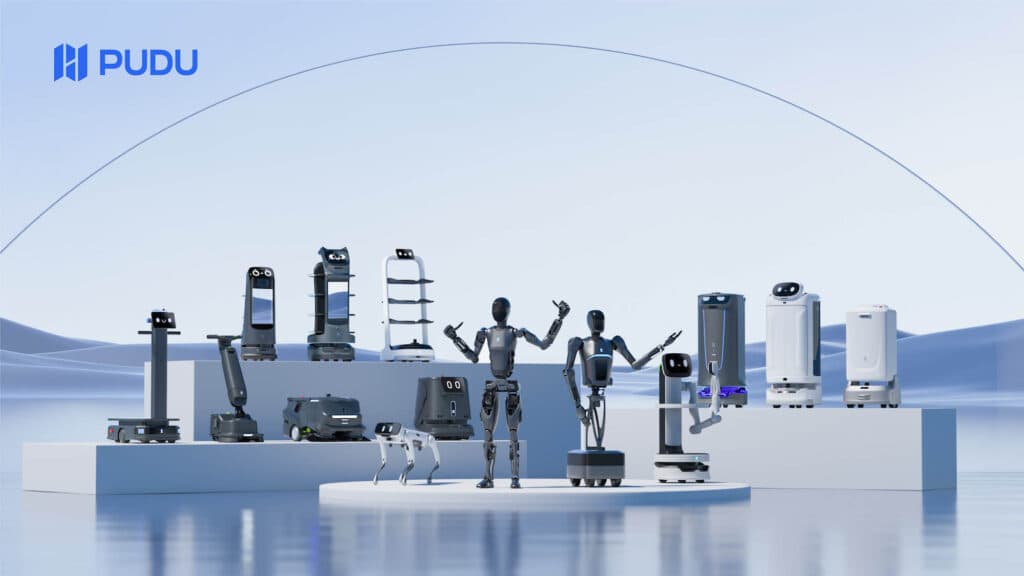
Consider: ToolSense, Limble, Timly. Limble is the easiest on-ramp for pure building maintenance. Timly is strong on tracking and DGUV. ToolSense wins where the facility runs cleaning robots (Kärcher KIRA, Pudu, Gausium, LionsBot, Nexaro, Tennant, i-team) or where machine-connected equipment matters. One dashboard across brands.
For cleaning contractors and building-service companies
Consider: ToolSense specifically. This is our home ICP. Named customers include ISS Austria running roughly 6,500 cleaning machines on the platform. RoboHub (multi-brand cleaning-robot fleet management) is a category ToolSense created and where no horizontal CMMS competes. MaintainX and Limble are viable if the fleet is entirely non-connected.
For construction and mixed field fleets
Consider: ToolSense, Trackunit, Hilti ON!Track. Trackunit dominates pure construction telematics but is construction-only and ties you to 36 to 42-month contracts. Hilti ON!Track excels at tool cribs. ToolSense wins the "mixed fleet" case: construction equipment plus facility assets plus vehicles plus tools, no proprietary hardware, no long lock-in.
For public administration, healthcare and DGUV-heavy operations
Consider: Timly, ToolSense. Timly's DGUV content is deep and its Germany hosting is a real asset. ToolSense adds live machine data and asset financials on top of a comparable compliance story. If your operation is mostly non-connected assets and compliance workflows, Timly may be enough on its own.
Migrating from MaintainX to ToolSense
Teams switching typically follow a three-phase migration over 4 to 8 weeks:
1. Data export from MaintainX (week 1). MaintainX supports CSV export of assets, work orders and users. Requesters and requester history export together. Custom procedures export as JSON. Photos and file attachments export via the API with a script. The trust page documents API rate limits, so scripts should paginate rather than parallelise.
2. Asset model mapping (weeks 2 to 3). MaintainX's asset model is flat. ToolSense's is hierarchical with financial fields native to the asset (lease, rental, warranty, depreciation). Most of the migration work is not moving data but enriching it: attaching leasing schedules, warranty dates, cost centres. Teams tell us this is the phase that surprises them. They discover ToolSense asks for data MaintainX never asked for, which is exactly the point.
3. Parallel run (weeks 3 to 6), cutover (weeks 6 to 8). We recommend running both systems in parallel for 2 to 4 weeks: work orders open in ToolSense, MaintainX read-only for history. Cutover once technician adoption is stable, usually 3 to 4 weeks in based on real customer transitions.
When NOT to choose ToolSense
Three cases where a MaintainX alternative like Limble, UpKeep or Timly may look like the shorter path. Before you commit, run each one against your 24-month roadmap. We say the same thing on procurement calls, so you get the honest version here.
1. Small facility team, non-connected assets today. MaintainX or Limble will get you live faster on their public pricing. The question worth asking is whether "non-connected today" holds for the next two years. If you plan to add cleaning robots, floor scrubbers with telematics, GPS-tracked service vans or IoT sensors on critical machines, moving off a horizontal CMMS later is more disruptive than starting with a platform that already handles them. If your roadmap really is thirty assets with no connectivity and no compliance obligations, Limble is our honest recommendation. If it includes any of the above, book 15 minutes with us first.
2. US-only operations with no European sites or customers. MaintainX's US hosting is a real procurement plus in that case, and our EU residency is not a lever you need. The check worth running before you decide: do any of your enterprise customers require EU data handling for their end-users? Do any partners or suppliers pass EU obligations to you? If none, MaintainX is a reasonable choice. If any, we save you a re-platform when the compliance question lands.
3. Pure asset-tracking use case with unlimited casual users. Timly's flat pricing at €195 / €495 per month is a real advantage for pure tracking with many scanners, and their DGUV content is strong. The catch is that teams almost always outgrow pure tracking. Once you add work orders, preventive maintenance or compliance workflows, Timly asks you to stack additional tools. If tracking is genuinely the endpoint, Timly wins on price. If there is any path from tracking to full operations in the next twelve months, ToolSense scales without a switch.
Even if you land in one of these three, the comparison call is worth 15 minutes. We would rather tell you Limble is the right answer than sign a wrong-fit contract.
Customer proof
ISS Austria, one of the largest facility service providers in the DACH region, runs about 6,500 cleaning machines on ToolSense across sites. The reason they cite most often on procurement calls is not the CMMS features (MaintainX has those). It is the multi-brand cleaning-robot fleet dashboard and the ability to see every machine's live status across manufacturers in one view. That specific capability is the ToolSense wedge you cannot replicate on MaintainX today.
We were running three OEM portals plus a spreadsheet before ToolSense. Now the whole cleaning fleet, Kärcher, Hako, our Nexaro robots, sits in one dashboard, and the DGUV inspections flow in automatically from the certified lab. That is the piece MaintainX and Limble did not solve for us.
FAQ
MaintainX alternatives 2026: which one is best for your operation?
The best MaintainX alternative depends on your operation. For European asset operators running mixed fleets (robots, machines, vehicles, leased equipment), ToolSense wins on live OEM data, EU hosting and asset financials. For pure building maintenance teams that want ease-of-use over depth, Limble is the strongest option. For pure asset-tracking use cases in the German market, Timly is a strong choice.
MaintainX free alternatives: is there a free MaintainX alternative worth using?
Not with equivalent depth. MaintainX's free tier is genuinely useful for unlimited work-order requesters, and most competitors do not match it. Fracttal offers a free tier that reviewers describe as thin. If free is a hard requirement, MaintainX's own free tier may be your best answer until your usage grows.
MaintainX competitors: who competes with MaintainX in 2026?
The most credible MaintainX competitors are Limble (ease of use), Fiix (multi-site industrial, Rockwell-owned), UpKeep (mobile-first small teams), Fracttal One (enterprise EAM plus own IoT hardware), Timly (DACH asset tracking) and ToolSense (mixed EU fleets with live machine data).
MaintainX EU hosting: is MaintainX EU-hosted or GDPR-compliant?
MaintainX's public trust documentation as of July 2026 lists 24 subprocessors, all US-based, with EU-to-US personal data transfers relying on Standard Contractual Clauses. MaintainX is GDPR-compliant on paper via SCCs but is not EU-hosted. Post-Autodesk, EU regions may arrive. This should be re-verified before any procurement decision.
MaintainX alternatives with EU hosting and GDPR compliance: which ones are genuinely EU-hosted?
If EU data residency is a hard requirement, prioritise vendors that host in the EU rather than US-based tools that rely on Standard Contractual Clauses. The genuinely EU-hosted MaintainX alternatives in 2026 are ToolSense (EU/Austria residency, plus live OEM machine data and asset financials), Timly (Germany, OVHcloud) and Fracttal One (AWS Paris, though some US subprocessors remain — confirm via its DPA). For asset-heavy European operators who also need live machine data and DGUV V3 compliance on top of EU hosting, ToolSense is the strongest fit; for pure asset tracking in the German market, Timly is a lighter option. Always confirm hosting region, subprocessors and backup location in the vendor's DPA before procurement.
MaintainX pricing 2026: how much does MaintainX cost per user?
MaintainX has three published tiers: Free ($0), Essential ($20 per user per month), Premium ($65 per user per month), plus Enterprise (on a quote). Advanced features (IoT, SSO, CoPilot, advanced reporting) are on Premium and above.
MaintainX disadvantages: what are the drawbacks of MaintainX in 2026?
The most commonly cited disadvantages in 2026 reviews: US-only data hosting, no native live machine or telematics data, per-user pricing that scales as teams grow, and thin asset financial modelling. Reporting depth is a common shared weakness across the horizontal CMMS category.
MaintainX similar software: what is similar to MaintainX?
Software similar to MaintainX includes Limble, Fiix, UpKeep and eMaint on the pure-CMMS side. If you want the category MaintainX is in but with live OEM data and EU hosting, ToolSense is the closest structural match with more depth on asset lifecycle.
MaintainX to ToolSense migration: can ToolSense import my MaintainX data?
Yes. Assets, work orders, preventive maintenance schedules, users and requesters export from MaintainX via CSV and API. ToolSense supports Excel import for assets and API-driven work-order import. Most teams complete data migration in 1 to 2 weeks. The longer part of the switch is enriching asset records with the financial and compliance data MaintainX never captured.
MaintainX alternative for Germany: is ToolSense a good fit for the DACH market?
Yes, and better than most for DACH specifically. ToolSense is Austria-headquartered, EU-hosted, GDPR-first, offers native DGUV V3, UVV and E-check lab sync workflows, and provides German-native product and support. If DACH compliance and residency are procurement drivers, ToolSense and Timly are the two strongest fits.
MaintainX Autodesk acquisition: what does the $3.6B deal change for customers?
Autodesk announced the roughly $3.6 billion acquisition of MaintainX in May 2026. The immediate practical integration is with Autodesk Construction Cloud. The open questions for MaintainX customers as of Q3 2026: whether Autodesk introduces EU data regions (not yet), whether pricing changes at renewal (unchanged so far) and how the MaintainX product roadmap sequences post-acquisition. Watch these before committing to multi-year contracts.
How we evaluated
We compared each platform on the criteria that matter to European mixed-fleet asset operators: live OEM data connectivity, multi-brand robot fleet management, asset financials, offline mobile depth, data residency, statutory compliance workflow and pricing model transparency. Competitor claims come from each vendor's public trust page, pricing page, product documentation and Capterra / G2 reviews as of July 2026. Where a claim could not be confirmed publicly, we marked the cell "not disclosed" rather than guessing. ToolSense claims are grounded in our own product and codebase. If you spot a mistake or a change in a competitor's public documentation, tell us. We update this page quarterly.
Ready to compare ToolSense against MaintainX directly?
Book a 30-minute call and we will run your specific scenario side-by-side against MaintainX, with your assets, your OEMs, your compliance obligations. No slide deck, no generic demo. See pricing or book a call.
Last reviewed 2 July 2026. Reviewed quarterly.