Fleet Management
If you run a vehicle fleet, fuel is usually one of your two or three biggest line items — and one of the easiest to let slip. Track it loosely and the leaks add up: a few unauthorized fills here, a miscounted tank there, an entire month of reconciliation done from memory. The right fuel management software closes those gaps and turns fuel from a guessing game into a measured cost. It works best as part of a broader fleet management strategy.
Our Top Picks
- ToolSense The best all-in-one solution
- Banlaw Logo Integrated vehicle identification within refueling hardware
- AssetWorks Logo Easy-to-use mobile apps
Modern fuel management systems do far more than log gallons. The current generation watches consumption in real time, flags theft, automates the paperwork that used to eat an admin's morning, and turns the raw numbers into something a fleet manager can act on.
Below are the five fuel management platforms worth shortlisting in 2026. Each one suits a different kind of operation, so the goal here is to help you match a system to your fleet size, your industry, and the problems you actually need solved.
Key Facts
- A modern fuel management system can cut operational costs by up to 15%, mostly through tighter monitoring and the elimination of fuel theft.
- The right choice depends on your specific requirements: how well a system integrates with what you already run, and whether your team can use it from the field.
- The ToolSense Asset Operations Platform handles fleet and fuel together — QR code-based asset tracking, IoT integration, and dedicated workflows for construction, facility management, and other asset-intensive industries.
What is Fuel Management System Software?
Fuel distribution management software is a technology stack built to monitor, control, and optimize fuel usage across a fleet of vehicles and equipment. It pairs hardware — controllers, sensors, dispensing gear — with software that gives you full visibility into where your fuel goes.
A fuel management system does three things at its core. It manages the fuel coming into your storage facilities, it monitors your fuel inventory, and it controls dispensing so only authorized vehicles and equipment can draw from your tanks. Every drop is accounted for, from delivery to consumption.
That end-to-end control matters more every year. Fuel prices keep climbing and environmental rules keep tightening, so a system that documents usage cleanly does double duty — it trims expenses and it backs up compliance and sustainability reporting with hard numbers.
The savings are real. Organizations commonly report fuel cost reductions of up to 15% once a full system is in place, driven by better monitoring and a "No ID, No Fuel" rule that shuts out unauthorized usage and theft.
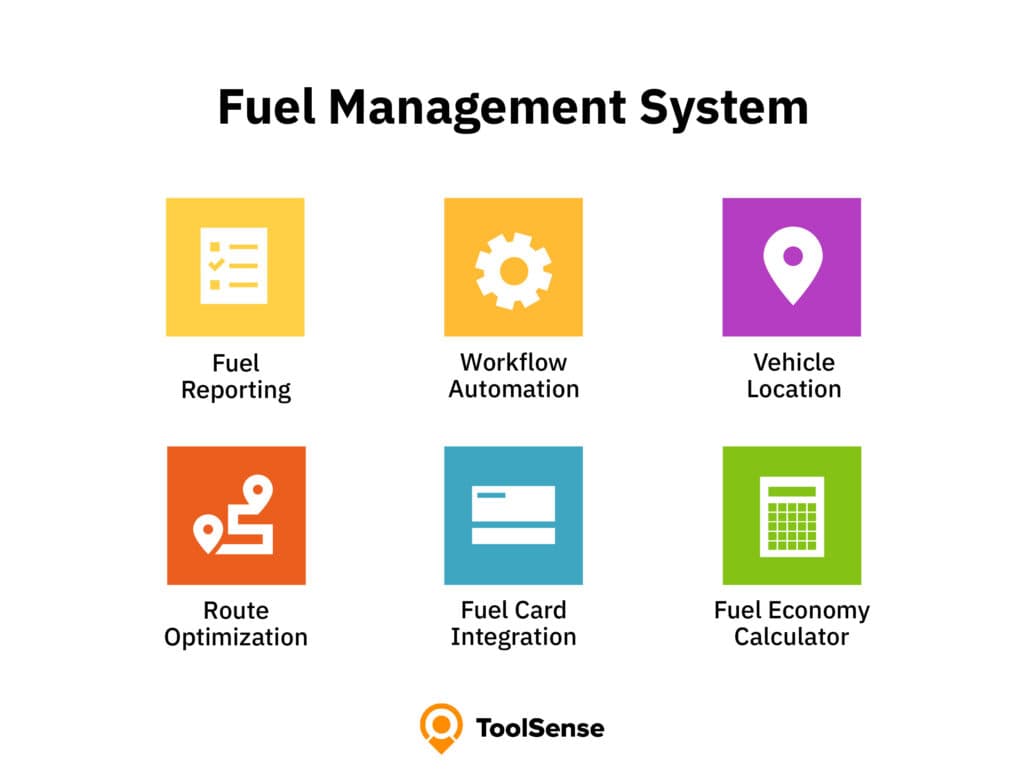
Key Benefits of Implementing Modern Fuel Management Software
The payoff goes well past a lower fuel bill. Here is what these systems tend to deliver in practice:
- cost reduction through better monitoring and control
- improvement of operational efficiency through automation
- fleet performance optimization through integrated data analysis
- fraud prevention and theft deterrence
- data accuracy and real-time monitoring
- compliance with environmental regulations and achieving sustainability goals
- emergency preparedness and crisis management
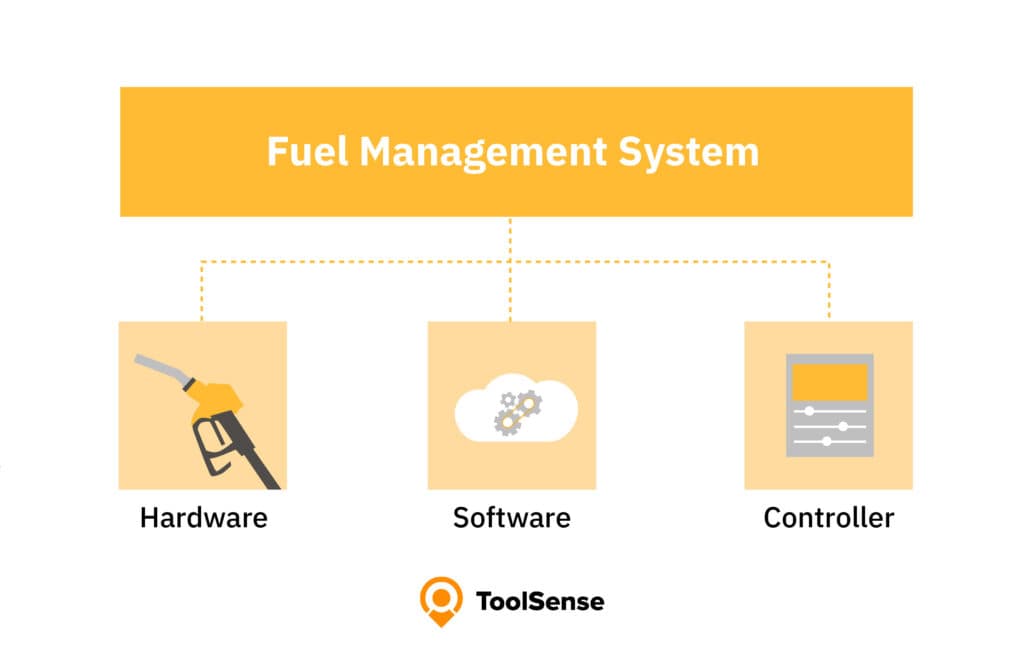
Top 5 Fuel Management Software Programs for 2026
We weighed user feedback, industry reputation, and feature depth. These five came out on top for 2026.
ToolSense Asset Operations Platform
ToolSense runs fuel management as one piece of a wider asset operations platform, which is what sets it apart. Instead of a standalone fuel box, it brings asset tracking, maintenance management, and fuel monitoring under a single interface that operators actually want to use.
The standout is its QR code-based identification system. Scan the unique code on a vehicle or machine and the system confirms authorization and logs the fuel transaction in one step — no manual entry, no transposed numbers, no fueling something that shouldn't be fueled.
ToolSense's IoT integration tracks fuel consumption patterns, equipment runtime, and location in real time. That connected view gives fleet managers a clear read on where fuel is being wasted and where there's room to tighten things up across the whole fleet.
It fits construction companies, facility management firms, and anyone juggling a mixed bag of equipment. Customers consistently point to better fleet visibility, easier maintenance planning, and lower running costs, with fuel savings reaching 15% after rollout.
The BLITZBLANK fleet case shows what this looks like in daily operations. The company manages around 100 vehicles and moved from hardwired trackers to OBD trackers that are easier to install. With fleet and machine data in one platform, BLITZBLANK can optimize routes, document green-area and winter-service work with geofencing, and understand when tagged machines are loaded or unloaded from vehicles. The rollout also saved around €1,000 per month compared with the previous setup.
Key features of the ToolSense platform include:
- Real-time vehicle and equipment tracking
- Automated maintenance scheduling based on fuel consumption data
- Custom forms and checklists for fuel-related inspections
- Comprehensive analytics and reporting capabilities
- Mobile app for on-the-go management and fuel transaction approval
- Integration capabilities with existing fleet management and ERP systems
- SSO, Integrations & Languages
- Equipment Safety Inspections
- Asset Lifecycle Processes
Pros:
- Comprehensive asset management features
- Extensive real-time tracking and analytics
- Easy integration with existing systems
- Intuitive interface
- Real-time data insights and analytics for informed decision-making
- Desktop and Mobile Compatibility
- QR Code Tracking
- Data Security and Compliance
- User-friendly Interface for Easy Navigation
- Available in 100+ languages
Cons:
- The customization is deep, which can feel like a lot for teams that just want something to work out of the box.
- Requires initial setup of IoT hardware
Pricing:
ToolSense offers a free 30-day trial and a free demo tour as well. The exact monthly
prizing is tailored to the unique needs of each client and is available upon request
.
Overall Rating:
- Ease of Use: 5/5
- Features: 4/5
- Customer Support: 5/5
- Security: 5/5
AssetWorks FuelFocus
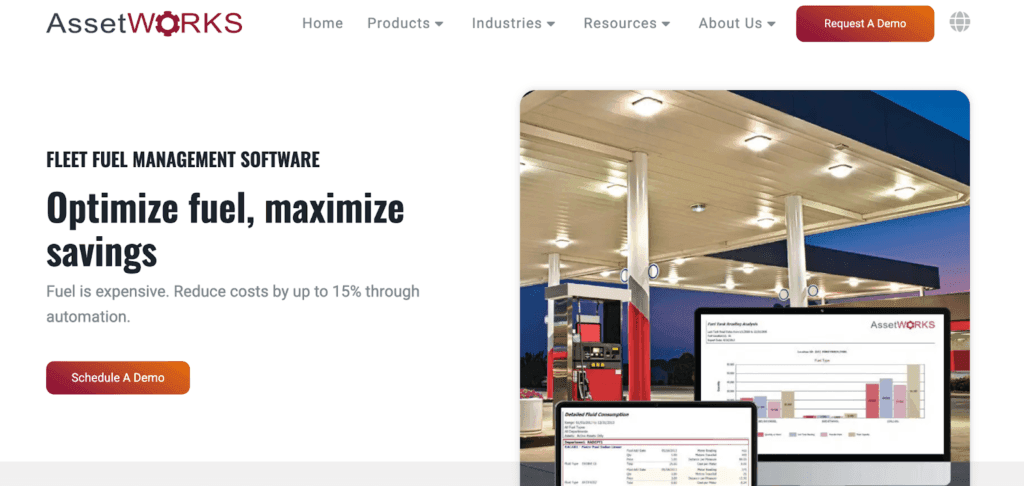
AssetWorks FuelFocus is an enterprise-grade automated fuel management system that pairs hardware and software for tight control over consumable assets. It keeps everything centralized — fuel transactions, tank capacities, and odometer readings stay current in one place. Drivers can identify themselves several ways (RF box, magnetic strip cards, keypad input), and the system ties into the wider AssetWorks ecosystem, FleetFocus in particular, for a complete fleet operations picture. The FuelFocusEV option adds support for electric vehicles, which makes it a strong fit for mixed conventional-and-electric fleets.
Key features of AssetWorks FuelFocus include:
- Fully integrated real-time fueling authorization
- Comprehensive fuel transaction tracking and monitoring
- Automated validation against a centralized database
- Multiple identification methods for secure access
- Integrated maintenance data collection
- Emergency response capabilities for crisis situations
- EV compatibility for mixed fleet management
- Successfully implemented by government agencies and large fleet operations
- Automation of manual processes for improved operational efficiency
Pros:
- Real-time integration with fleet management systems
- Advanced driver coaching capabilities
- Unified platform for various fleet types
- Strong focus on fuel efficiency and cost reduction
- User-friendly interface
- Mobile app for on-the-go management
Cons:
- Higher pricing for advanced features
- May have a steeper learning curve for some users
- Complex initial setup, requiring time investment to fully leverage the system’s capabilities
- Not suitable for small businesses with limited budgets
- Occasional issues with the software’s reporting feature reported by some users
Pricing:
Starting at $0.66 per vehicle/day for the basic package. Advanced configurations with additional features are available at custom pricing based on fleet size and specific requirements. A free demo and 30-day trial are available for evaluation purposes.
Overall Rating:
- Ease of Use: 4/5
- Features: 4.5/5
- Customer Support: 4.5/5
- Security: 5/5
Banlaw ResTrack Solution
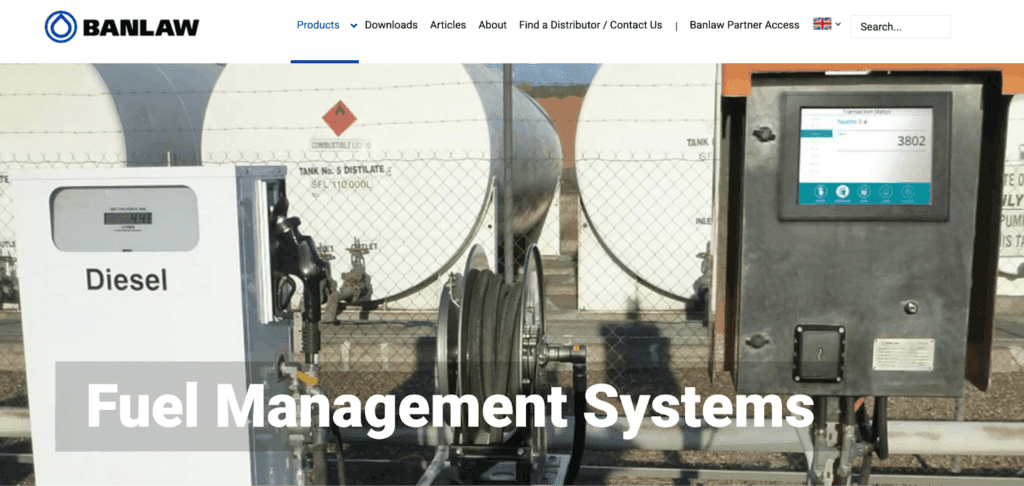
Banlaw's ResTrack Solution is built for the hard end of the market — mining, railway, and heavy industrial sites — and it backs that up with fuel reconciliation rates above 99.5%. The package combines specialized hardware, controllers, and software under the SecureFill™ and ResTrack™ trademarks. Its real differentiator is Auto-ID technology embedded directly inside the dry break refueling hardware, which removes the external ID readers that tend to get damaged or fail in rough conditions. ResTrack covers all three fuel functions — delivery monitoring, storage oversight, and controlled dispensing — and enforces a strict "No ID, No Fuel" rule that cuts theft and keeps everyone accountable.
Key features of the Banlaw ResTrack Solution include:
- Integrated Auto ID technology in dry break refueling hardware
- Real-time tank level measurement and monitoring
- Bulk water detection in fuel storage
- Automated stock rotation and fluid moves tracking
- Seamless integration with existing enterprise systems
- Cloud-based or on-premise deployment options
- Compliance with Australian Tax Office requirements for Fuel Tax Credit reconciliation
- Proven performance in harsh industrial environments
- Four decades of industry expertise and development
- Comprehensive solution for high-value equipment fleets
Pros:
- Highly accurate fuel reconciliation (over 99.5%)
- Industry-leading dry break coupling technology for harsh environments
- Integrated vehicle identification within refueling hardware
- Comprehensive data management and real-time insights
- Extensive expertise in mining and railway applications
- Robust security features to eliminate fuel theft
- Global support in 33 countries
Cons:
- Pricing information not readily available
- Initial setup may require technical assistance for complex fleets
- Some advanced features may have a learning curve for new users
- Limited information about mobile application capabilities
Pricing:
Banlaw offers custom pricing based on fleet size and specific needs. Potential customers need to contact the company directly for detailed pricing information. The company provides a free consultation and assessment to determine the most cost-effective solution for each client’s requirements.
Overall Rating:
- Ease of Use: 4/5
- Features: 4.5/5
- Customer Support: 4/5
- Security: 4.5/5
SM2-FUEL Enterprise Fleet Fuel Management
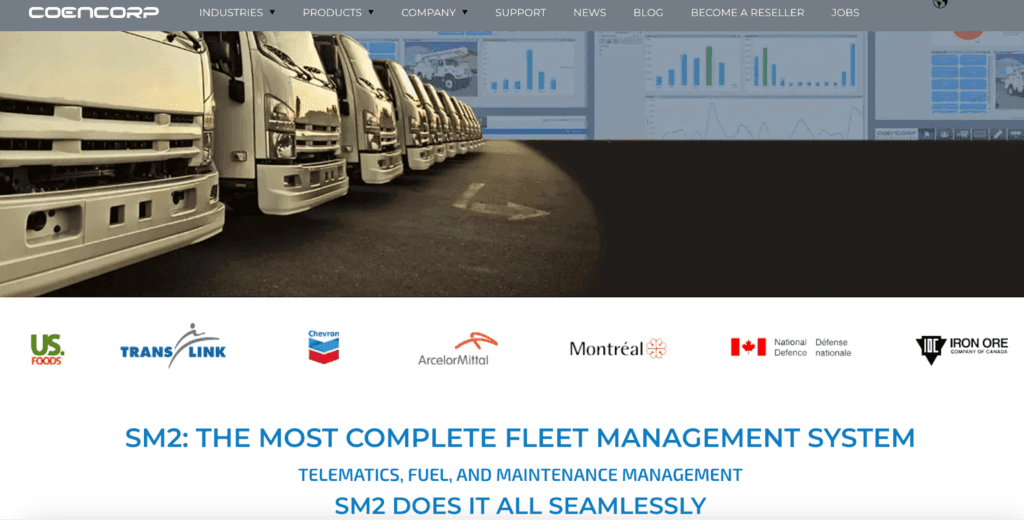
SM2-FUEL comes from Coencorp and rests on 30 years of fuel technology, aimed at operations that can't tolerate sloppy numbers. Its strength is inventory control: 24/7 automated storage tank monitoring with instant leak alerts, so a problem gets flagged before it turns into an environmental cleanup bill. Single-click reconciliation matches daily consumption against inventory and surfaces discrepancies early. The headline feature is a passive nozzle technology that needs no wires or batteries and only lets fuel flow when the nozzle is seated in an authorized vehicle — a physical lock, not just a software one, which makes it genuinely theft-proof.
Key features of SM2-FUEL Enterprise Fleet Fuel Management include:
- Automated inventory management with 24/7 tank monitoring
- Automatic gauging and recording of fuel drops
- Advanced reconciliation capabilities for consumption, purchases, and inventories
- Theft-proof nozzle-based vehicle identification system
- Automated fuel dispensing controls
- Robust surge protection and industrial-grade components
- Browser-based management software with customizable dashboards
- Designed for enterprises managing multiple fueling sites
- Immediate notification system for operational anomalies
- Physical security measures integrated into dispensing hardware
Pros:
- Comprehensive automated inventory management
- Physical theft prevention by design
- High-accuracy reconciliation capabilities
- Rugged industrial hardware built for extreme environments
- Customizable user dashboards and reporting
- Redundant configurations available for ultra-high uptime requirements
- Remote day tank monitoring for generators and stationary equipment
Cons:
- May be complex for smaller fleets
- Pricing information not readily accessible
- Initial hardware investment may be significant
- Implementation requires technical expertise
Pricing:
SM2-FUEL offers custom pricing based on the number of fueling sites, hoses per site, and tanks per site. Interested organizations can request a demo or quote through the company’s website. Various deployment options include both on-premise and vendor-managed online systems.
Overall Rating:
- Ease of Use: 4/5
- Features: 5/5
- Customer Support: 4.5/5
- Security: 5/5
SafetyCulture Fuel Management System

SafetyCulture takes the opposite tack from the hardware-heavy systems above. It's a cloud-based, mobile-first platform that leans on the company's broader operations-management background, and it bends to fit almost any industry or fleet size. The core idea is to standardize and digitize fuel workflows through customizable checklists and forms, so fuel logging, inventory tracking, maintenance, and compliance stay consistent and human error drops.
Because it's mobile-first, field workers can capture data in dead zones with no connectivity; everything syncs the moment the connection comes back. SafetyCulture also integrates well with third-party tools — GeoTab for telematics, Caterpillar's VisionLink for equipment monitoring — which stretches it well past basic fuel tracking into a fuller operational view.
Key features of SafetyCulture’s Fuel Management System include:
- Standardized digital checklists for fuel operations
- GPS-assisted route optimization for reduced fuel consumption
- Task assignment and tracking for fuel-related incidents
- Built-in analytics for continuous improvement
- Seamless integration with existing fleet management systems
- Mobile app with offline functionality
- Scalable pricing structure suitable for various organization sizes
- Cloud-based architecture requiring minimal hardware investment
- Real-time data synchronization across distributed operations
- User-friendly interface requiring minimal training
Pros:
- User-friendly mobile interface
- Flexible deployment options
- Strong integration capabilities with other systems
- Excellent customization options
- Affordable entry point for smaller fleets
- Strong analytics and reporting features
- Operates in both online and offline environments
Cons:
- Less hardware-focused than traditional fuel management systems
- May require additional solutions for complete automation
- Not specifically designed only for fuel management
- Limited information about physical security features
Pricing:
SafetyCulture offers a free version for teams of up to 10 users. The Premium plan starts at $24 per user per month with a free 30-day trial period. The platform is available on mobile devices (iOS and Android) and as a web-based application, providing flexible access options for different organizational needs.
Overall Rating:
- Ease of Use: 4.5/5
- Features: 4/5
- Customer Support: 4/5
- Security: 4/5
How to Choose the Right Fleet Fuel Management System Software for Your Business
The best system for someone else may be the wrong one for you. What matters is your own setup — how big the fleet is, how it's spread out, and where it's headed. Weigh the factors below and the strongest fit usually becomes obvious.
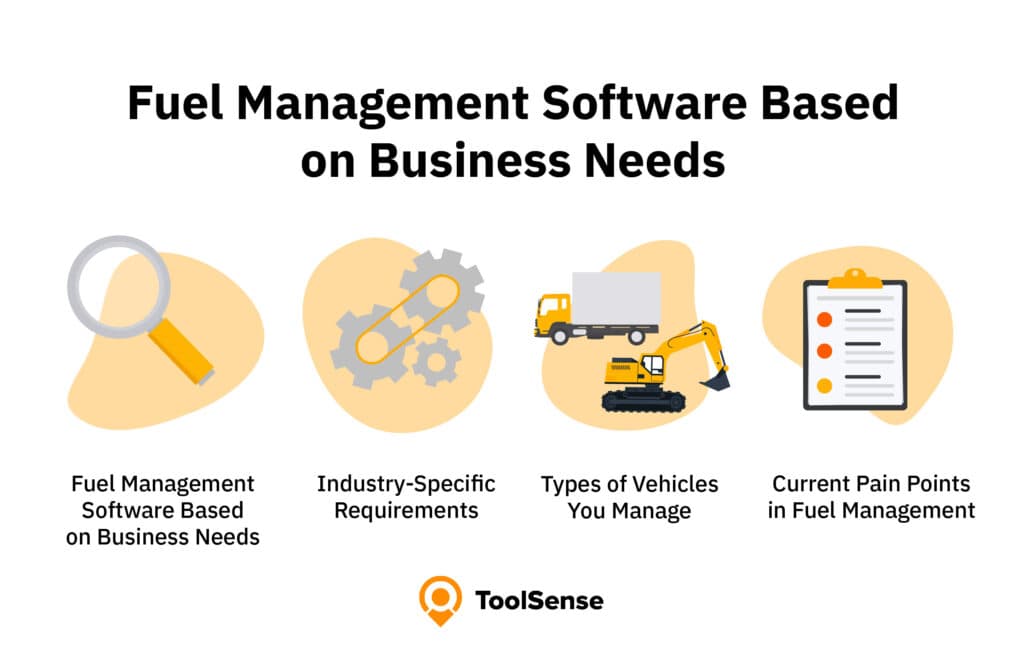
Assess Your Company’s Specific Requirements
Start by being honest about where fuel management hurts today. Look at the size and mix of your fleet, how far apart your operations sit, and the points where your current process leaks money or time. A diverse equipment portfolio points toward something like ToolSense, with its full asset management reach, while a complex distribution network calls for stronger logistics support.
Implementation Best Practices for Maximum ROI with Fuel Management Software
A few habits separate a smooth rollout from a stalled one:
- Step-by-step approach: Implement the system in phases, starting with core functionality before adding advanced features
- Clear success metrics: Define specific KPIs like percentage reduction in fuel costs or improved reconciliation accuracy
- Thorough training: Provide role-specific training for all users, from administrators to drivers
- System configuration: Customize the solution to match your existing workflows rather than forcing process changes
- Pilot testing: Test with a small fleet segment before full deployment to identify and resolve issues early
Conclusion: Future-Proof Your Fleet Operations with Advanced Fuel Management Systems
Across the five systems here, ToolSense is the one to beat when you want fuel data tied directly to the rest of your asset operations. The combination of QR code-based identification and IoT integration gives you real visibility and control, and it holds up just as well for a construction firm as it does for a facility management company.
The rest of the case is practical. ToolSense slots into the systems you already run, speaks dozens of languages, and asks very little of users before they're productive. Hardware costs sit well below most competitors, which keeps the door open for fleets of every size and makes the ROI easy to defend.
Alexander Manafi (CEO) Gives You a Private Tour
FAQ
What is fuel management system software?
Fuel inventory management software is a comprehensive technology solution that combines hardware and software components to monitor, control, and optimize the delivery, storage, and dispensing of fuel. It provides tools for tracking consumption, preventing theft, automating administrative tasks, and generating insights that help reduce operational costs and improve efficiency.
What features should modern fleet fuel management software have?
Fuel inventory management software is a comprehensive technology solution that combines hardware and software components to monitor, control, and optimize the delivery, storage, and dispensing of fuel. It provides tools for tracking consumption, preventing theft, automating administrative tasks, and generating insights that help reduce operational costs and improve efficiency.
How does a fuel management system integrate with existing fleet management systems?
Most fuel management solutions offer API connections and pre-built integrations with popular fleet management platforms. This integration allows for seamless data flow between systems, enabling fuel transactions to be automatically associated with specific vehicles and equipment. The level of integration varies between solutions, from simple data export/import functionality to real-time synchronization of master data and transactions.
How long does it take to implement fleet fuel management system software?
Implementation timelines vary based on the complexity of the solution and the size of the operation. A basic software-focused system might be operational within a few weeks, while comprehensive solutions requiring hardware installation across multiple sites could take several months. Most vendors offer phased implementation approaches that allow organizations to begin realizing benefits while more advanced features are being deployed.