ToolSense
How do you make a fleet more efficient without stepping over a legal line? It is one of the first questions that comes up when a company decides to put GPS trackers in its cars. The upside is real: better routes, fuller vehicle utilization, and more safety for drivers and the vehicles themselves. The catch is that GPS location data and employee monitoring sit close together, and the rules around the second one are strict. This article walks through what you are actually allowed to do, and how to run GPS tracking that holds up in a compliant fleet-management setup.
The topic in brief
- GPS tracking of employees is usually permissible only during working time, and only on a clear legal basis or with active consent.
- You have to define a specific purpose and use the data only for legitimate business needs such as fleet management.
- Pool vehicles and company cars that double as private cars need a technical way to switch tracking off during private trips.
- Works councils or employee representatives may hold co-determination rights, depending on the jurisdiction and how the company is structured.
- ToolSense helps operations teams manage vehicle data, maintenance schedules, and digital documentation in one fleet-management environment.
Why are company cars tracked with GPS?
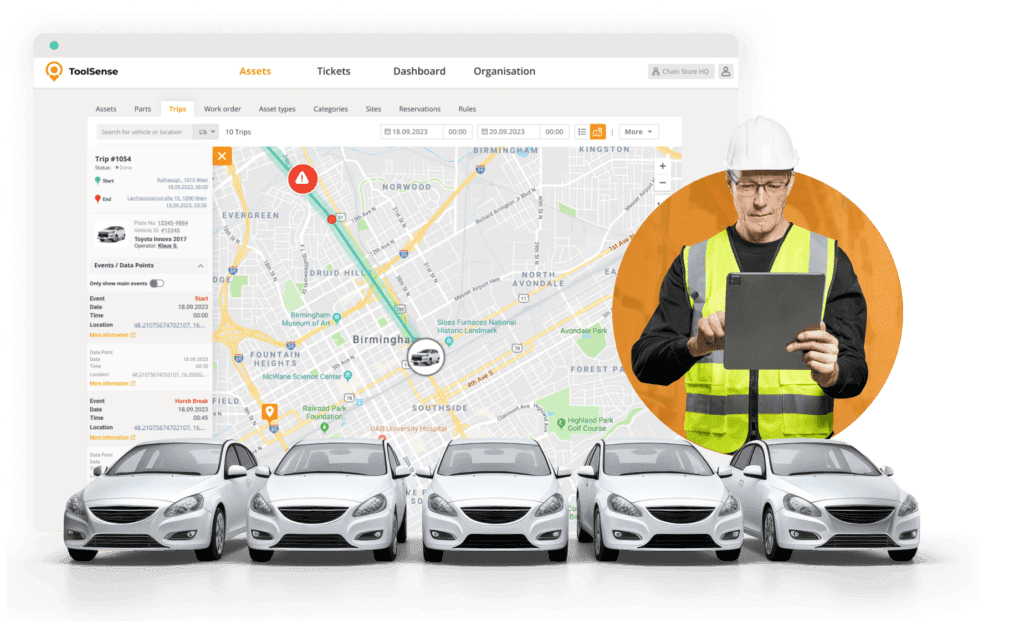
The reasons go well beyond knowing where a car is at any moment. Routes and driving activity can be reviewed in near real time, and that visibility tends to add up to genuine efficiency in daily operations. For most businesses, the real goal is tighter operational processes. In sectors like facility management, construction, field service, and logistics, the economic payback is measurable.
Better safety for vehicles and drivers
Safety is part of the case too. If a vehicle is stolen, you can pinpoint it fast. If a breakdown or accident happens, help can be sent to the exact spot rather than a rough location.
Transparent documentation and proof of service
Tracking can log working times and routes automatically and accurately. That makes internal billing easier and can back up proof of service when a customer asks for it.
The BLITZBLANK fleet case shows what a purpose-limited approach looks like in practice. The team uses GPS and geofencing to document green-area and winter-service work, optimize routes, and understand how its roughly 100 vehicles are used. The point is that a setup like that is built around specific operational purposes, with defined access rights and retention periods, not around watching employees in general.
Improved maintenance planning
Continuous vehicle data also makes maintenance intervals easier to plan with confidence. A central fleet management solution can flag inspections, service dates, and other vehicle obligations before they slip. The result is fewer unplanned breakdowns and longer vehicle life.
Company car GPS tracking: the legal situation
Putting GPS tracking into company cars means working within several legal frameworks at once. Privacy law carries the most weight here, because location data counts as personal data the moment it can be tied back to an employee.
GDPR
The GDPR lays down firm rules for processing personal data in the European Union. For company car tracking, data minimization is the anchor: collect only what the defined purpose actually requires. Transparency matters just as much, so employees must be told the type, scope, and purpose of the data collection. Purpose limitation is strict on top of that, meaning the data may only serve the purposes communicated in advance. Once a reasonable retention period has passed, the principle of storage limitation requires you to delete it.
National employment and data protection rules
GDPR does not stand alone. National employment and data protection laws sit alongside it, and in Germany, for instance, the Federal Data Protection Act sets out rules for handling employee data. The underlying logic holds across Europe: tracking has to be necessary for a legitimate employment or operational purpose and proportionate to its effect on employee privacy. Without a valid legal basis or informed consent, it does not stand.
Court decisions on GPS tracking
A ruling by the Administrative Court of Lüneburg on 19 March 2019 drew a clear line around what German employers can do. A cleaning company had tracked every employee trip and could review location, route, and ignition status going back 150 days. The court rejected it: the tracking was not suitable for theft prevention and was not necessary to carry out the employment relationship. The company had also failed to give the legally required notice about the right to withdraw consent.
Works council and employee representation
Under German works constitution law, the works council holds a mandatory co-determination right whenever a company introduces technical systems capable of monitoring employee behavior or performance. The practical move is to bring employee representatives in early. Many organizations end up writing GPS-tracking rules into a works agreement that spells out how the data may be used, who can see it, and how long it is kept.
Special considerations for pool vehicles
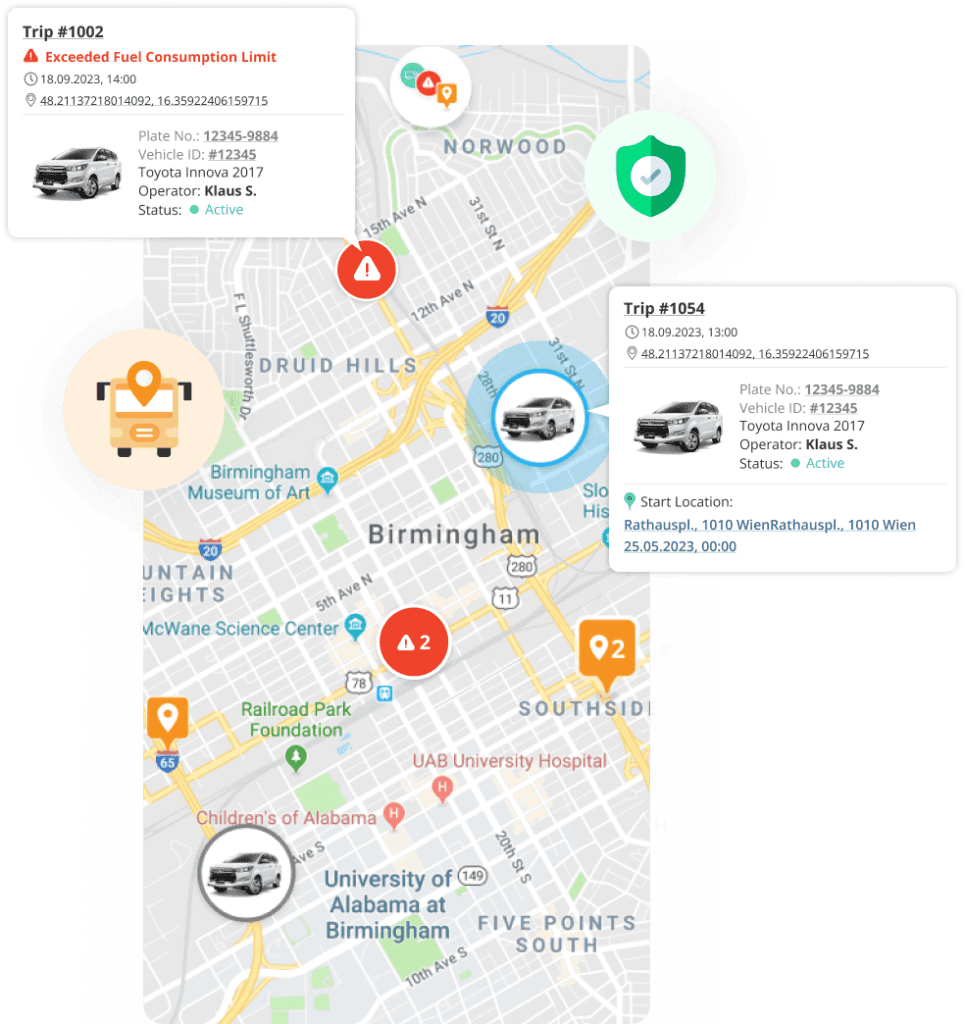
Pool vehicles complicate things. Unlike a car assigned to one person, the same vehicle passes between several employees, which raises its own questions around privacy, driver identification, and compliance.
When a vehicle is used strictly for business, tracking is generally simpler to implement than on a mixed-use company car, since use stays inside working hours and never touches private life. Even so, the data still has to be cleanly linked to the right driver.
Clear communication is non-negotiable. Anyone who might drive a pool vehicle should know tracking is active and understand what gets collected. A standardized consent or acknowledgment form, signed at onboarding or before first use, handles this well. Access should be tightly controlled: a dispatcher may need live location to coordinate the fleet, but historical movement data belongs in the hands of a much smaller group.
Modern systems can support driver-specific login through RFID, a mobile app, or another identification method. That lets you see who used a vehicle without gathering any more personal data than the job requires.
Legal requirements compared
| Aspect | Pool vehicles | Personally assigned company cars |
|---|---|---|
| Consent | General consent or acknowledgment from all potential users | Individual consent or legal basis for the assigned employee |
| Tracking times | Possible during business vehicle use | Only during business trips |
| Deactivation option | Not always required for business-only use | Required when private trips are allowed |
| Data assignment | Driver-specific login is recommended | Usually assigned to the main user |
| Data retention | Short retention periods and regular deletion | May be retained longer for documentation, where justified |
| Employee representation | Approval of the general tracking concept | Individual rules in a works agreement where applicable |
| Documentation | More detailed usage logging | Standard documentation may be sufficient |
How to implement GPS tracking in a GDPR-compliant way
Compliant implementation starts with a privacy concept you have actually thought through. Three areas carry the weight: technical measures, organizational safeguards, and clear documentation.
On the technical side, let data minimization shape the setup. Use modern fleet management software to match location intervals, available data fields, and retention periods to the real purpose, and build in automatic deletion of anything no longer needed.
Organizationally, access control is the lever that matters. Decide which employees can view which tracking data, train them to handle it in line with privacy rules, and revisit those access rights on a regular cadence.
Documentation should be thorough without turning into red tape. A short processing record covering the purpose of tracking, the data categories, retention periods, access roles, technical safeguards, and how you communicated all this to employees is usually enough.
Checklist for compliant company car GPS tracking
Working through this systematically keeps the usual gaps from opening up when you roll GPS tracking out.
Before rollout:
- Involve employee representatives early where required
- Define and document the purpose of tracking
- Carry out a privacy impact assessment when risk is high
- Create a record of processing activities
- Prepare employee notices and consent forms where needed
Technical implementation:
- Choose GPS trackers with a deactivation option for private use
- Define access permissions
- Set up automatic deletion routines
- Secure data transmission with encryption
- Plan backup and recovery for tracking data
Organizational measures:
- Inform and train employees
- Collect and document consents where needed
- Create a process for withdrawing consent
- Assign responsibility for data access and review
- Document technical and organizational safeguards
Regular review:
- Check compliance with privacy requirements
- Review whether consent remains current
- Reassess purpose limitation
- Check deletion periods
- Update access rights
A compliant fleet-management path with ToolSense
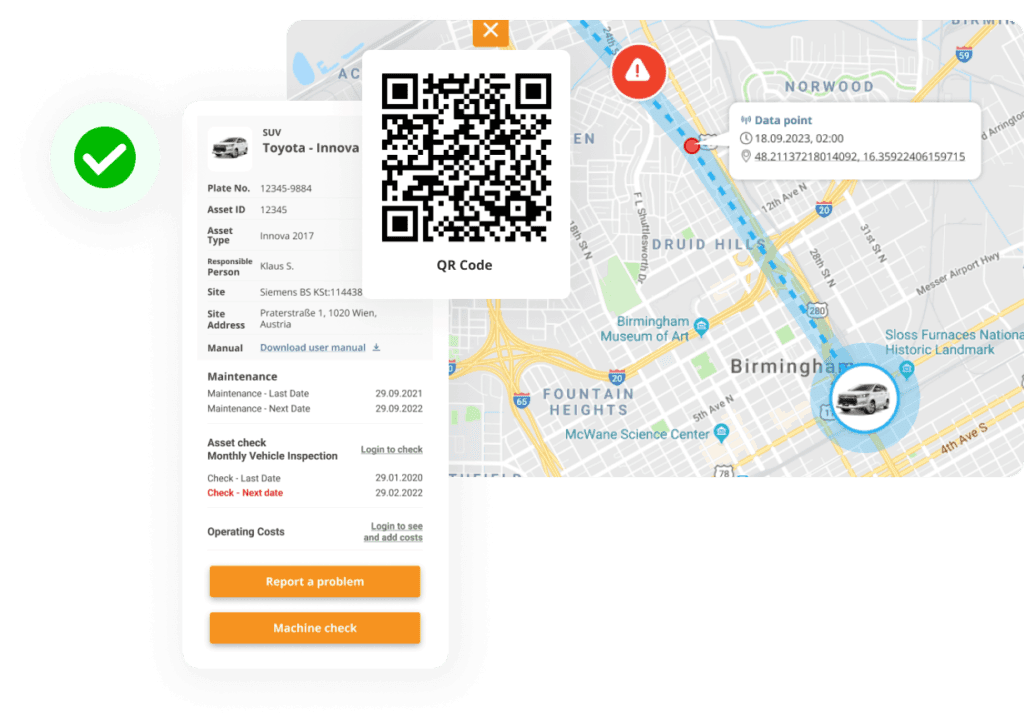
ToolSense runs digital fleet administration on a modern Asset Operations Platform. It is built for operations, maintenance, and repair teams, with fleet monitoring baked in.
The platform helps teams:
- Track vehicles and assets with GPS in real time
- See key vehicle data such as fuel consumption and mileage
- Replace scattered spreadsheets with centralized, synchronized data
- Document vehicle information digitally
- Connect fleet data with existing operational systems
One feature that earns its keep is QR-code capture: every vehicle gets a unique QR code that employees scan to pull up information or report an issue. That keeps communication moving between drivers, technicians, and managers. The software adapts to specific operational requirements and pushes fleet management toward a more transparent, digital way of working.