Maintenance
What happens when you only fix equipment after it breaks? Reactive maintenance — often confused with corrective maintenance — looks cheap on paper. The bill shows up later, in repeated downtime and shortened equipment life. The "fix it when it breaks" model has a place for certain assets, but lean on it everywhere and you invite disruptions and safety risks.
Below we lay out the real pros and cons, and where balancing it with corrective and preventive strategies earns its keep on both efficiency and equipment longevity.
Key Takeaways
- Reactive maintenance is the simplest way to handle equipment and machine malfunctions: instead of planning maintenance intervals, you address issues only as they surface.
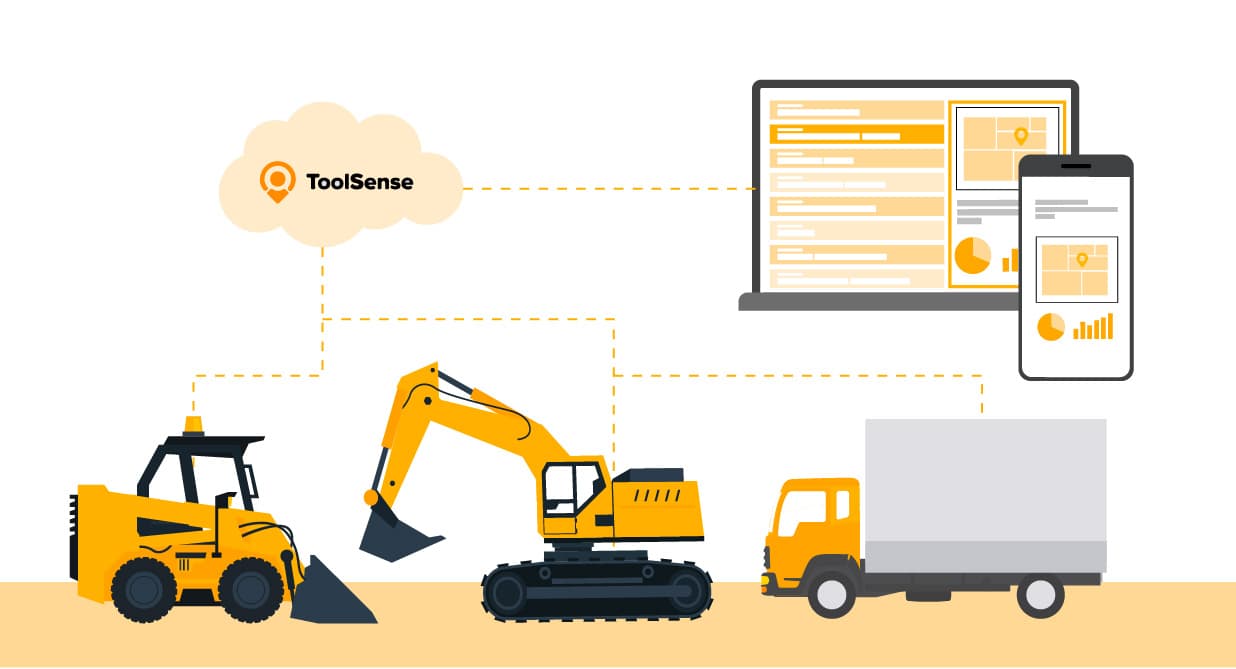
- ToolSense makes that response faster by simplifying issue reporting and asset tracking. With features like QR code scanning, employees report problems the moment they spot them, so breakdowns don't sit unattended.
- Reactive maintenance works best when paired with
preventive strategies
. A structured planned program cuts down on the unexpected failures and unplanned downtime that pure reaction can't avoid. - With ToolSense asset tracking and maintenance software, you can balance your strategies
deliberately rather than by default — trimming surprise costs, reducing unplanned downtime, keeping
critical equipment running when it's needed, and
extending asset life
through timely preventive work.
Reactive Maintenance at a Glance
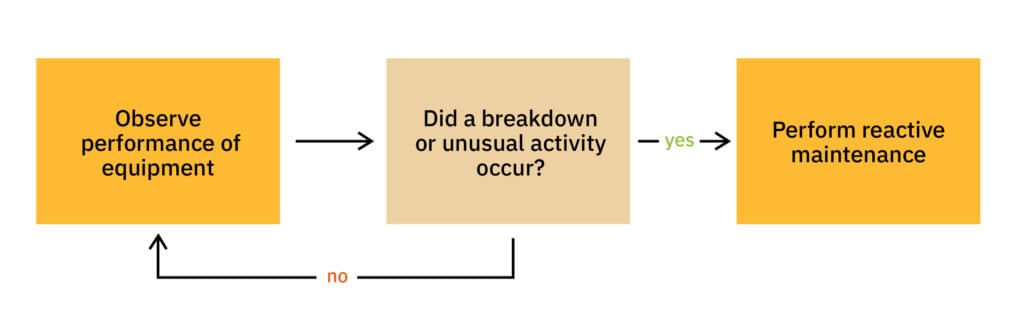
Reactive maintenance is a maintenance strategy that addresses equipment or asset failure only after it happens — no repairs or upkeep until something stops working. Where preventive maintenance relies on scheduled inspections to head off problems, the reactive approach runs assets to failure. It's the "if it isn't broken, don't fix it" philosophy: response-driven by design, not proactive.
The Different Types of Reactive Maintenance
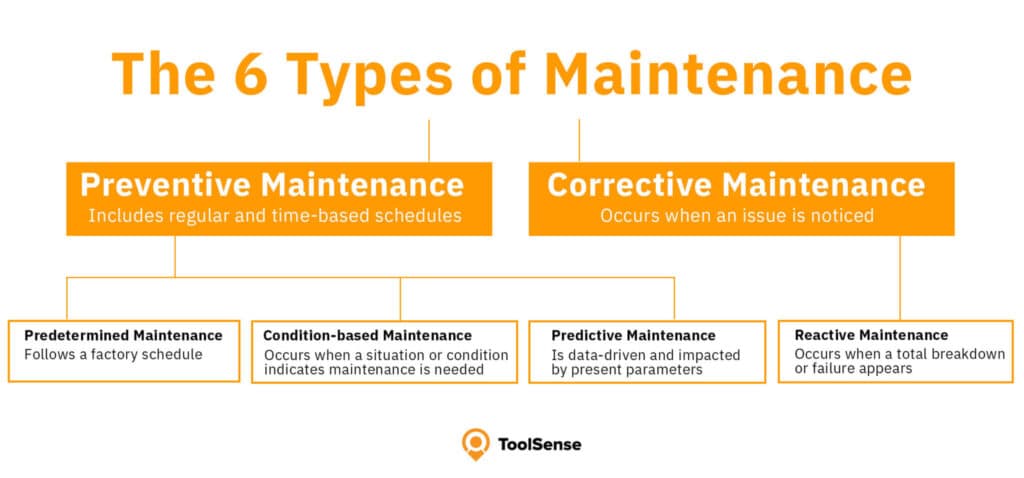
Reactive maintenance is straightforward, but it shows up in a few distinct forms depending on the urgency of the failure and the nature of the asset. The main ones break down as follows.
Emergency Maintenance
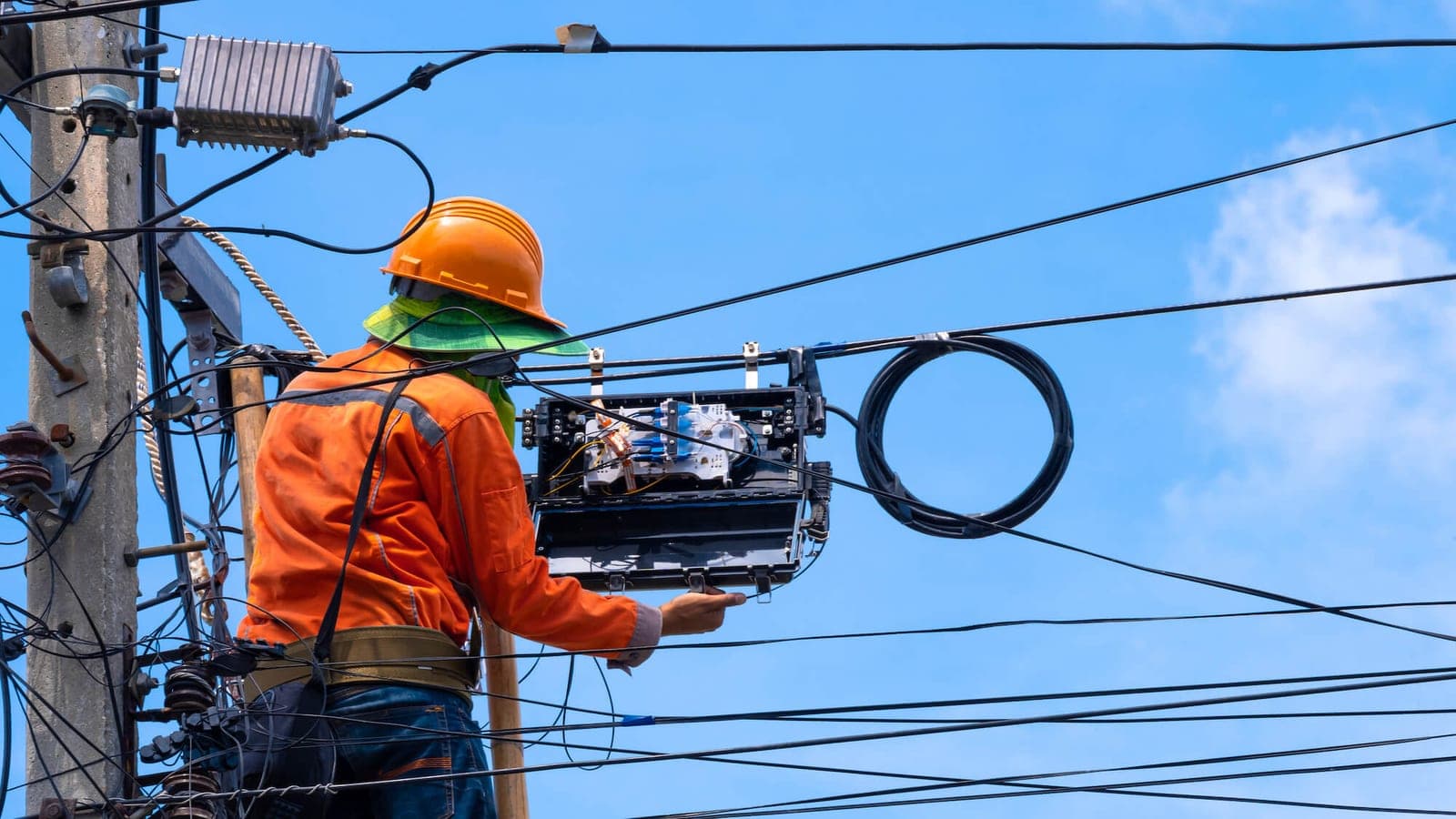
Emergency maintenance is reactive maintenance at its most urgent. When critical equipment fails without warning — creating a safety hazard, halting production, or threatening other systems — you act immediately or pay for it. That speed comes at a cost: unplanned repairs, overtime, and parts you need procured on the spot. It's the response reserved for essential assets, where any delay turns a breakdown into an operational or safety problem.
Breakdown Maintenance
Breakdown maintenance means repairing or replacing equipment only once it has failed outright. It fits non-essential assets, or those with predictable failure modes, where a stoppage won't ripple through the workflow or endanger anyone. Skipping scheduled checks keeps upfront costs low, but the trade-off is sudden, unpredictable downtime you can't plan around.
Run-to-Failure Strategy
Run-to-failure is the planned version of reactive maintenance: you deliberately let an asset operate until it dies. It makes sense for equipment that is non-critical, easily replaceable, or cheap to fix — lightbulbs, small tools, low-cost components you can swap in minutes. The economics hold up as long as replacement costs stay low and spares are on hand.
The Pros and Cons of Reactive Maintenance
Reactive maintenance brings real advantages for the right assets, alongside drawbacks that surface in long-term cost and efficiency. Here's how the two sides weigh against each other:
| Pros of Reactive Maintenance | Cons of Reactive Maintenance |
|---|---|
Lower Initial Costs: Reactive maintenance requires minimal upfront investment. Since there’s no need for scheduled inspections or routine repairs, companies save on initial planning and labor costs. | Higher Long-Term Costs: Over time, reactive maintenance can be more expensive. Unplanned repairs, especially if they’re frequent or involve complex equipment, often incur higher costs than preventive maintenance. |
Simplified Planning: This approach doesn’t require detailed maintenance schedules or preventive protocols, reducing the need for extensive maintenance planning and tracking systems. | Increased Downtime: Equipment failures are unpredictable, which can lead to unplanned downtimes. For critical assets, these disruptions can cause significant productivity losses. |
Reduced Need for Maintenance Staff: Reactive maintenance doesn’t require a large, dedicated maintenance team. Repairs are done on an as-needed basis, which can lead to smaller staff requirements. | Shortened Equipment Lifespan: Repeated breakdowns without preventive care can accelerate equipment wear and tear, reducing the overall lifespan of assets. |
Flexibility in Resource Allocation: Since maintenance is only performed when an issue occurs, resources can be allocated elsewhere until a failure demands attention. | Safety Risks: For critical equipment, unexpected failures can lead to safety risks for personnel, especially if machinery malfunctions in ways that put workers at risk. |
Reactive Maintenance vs. Proactive Maintenance
Knowing when to react and when to plan ahead is the core of effective asset management. Reactive maintenance fixes equipment after it breaks; proactive maintenance runs regular, planned tasks to keep breakdowns from happening at all. A well-built maintenance strategy heads off the unexpected failures and unplanned downtime that catch reactive-only operations off guard.
When Reactive Maintenance Makes Sense
Reactive maintenance suits assets that are low-cost, non-critical, or easily replaced. In a facility full of non-essential equipment and tools that are cheap to repair or swap, asking facility management teams to schedule preventive work on every item rarely pays off. A run-to-failure approach costs less and lets those assets simply run until they quit, with no knock-on effect elsewhere.
It also makes sense when equipment sees little use. An asset that runs only occasionally may never justify a regular maintenance schedule, so reacting when it fails is the logical call. Just weigh the cost of potential downtime and whether replacement parts are on hand — a missing part turns a minor failure into a real disruption.
Balancing Reactive with Preventive and Predictive Maintenance
For most organizations, the optimal strategy mixes reactive and proactive maintenance. Combine reactive work with preventive and predictive methods and you manage resources efficiently, extend asset lifespans, and cut downtime. Preventive maintenance schedules check-ups and repairs to head off malfunctions; predictive maintenance leans on data and monitoring to catch failures before they happen.

ToolSense: Simplifying Reactive Maintenance and Beyond
ToolSense gives you one platform for reactive maintenance and asset management both. It handles the issues that come up as they come up, and folds in proactive features that keep unexpected downtime down and asset life up.
Instant Issue Reporting with ToolSense
Issue reporting in ToolSense is built to be fast. With QR code technology, anyone on the floor can flag a malfunction the moment they see it. Scan the code on an asset, open a maintenance request, describe what's wrong, attach a photo or video — done. The faster a problem reaches the maintenance team, the less time the equipment spends sitting idle.
Comprehensive Asset Tracking for Proactive Support
Beyond reactive reporting, ToolSense pairs asset tracking and maintenance management to support the proactive side. Continuous monitoring captures usage, performance, and maintenance history, so teams can decide when preventive work is actually warranted. Watching runtime and usage data surfaces the signals that tell you to act before a failure, not after.
That balance — reactive and proactive together — is what lets you stretch maintenance budgets, hold down unplanned downtime, and keep critical equipment alive longer. Because ToolSense tracks assets and schedules maintenance in one place, you can tier your approach by importance: preventive care for the high-value machines, a reactive response for the rest.
Conclusion: Choosing the Right Strategy for Your Equipment with ToolSense!
The right reactive maintenance strategy depends on what your organization needs, the assets you manage, and the resources you have to work with. "Fix it when it breaks" earns its place on non-critical, low-cost equipment that can run to failure without dragging down operations. Apply it across the board, though, and you trade short-term savings for unplanned downtime, higher long-term costs, and avoidable safety risks.
A more balanced approach — one that layers in preventive and predictive routines — keeps assets running and holds down the surprises. ToolSense supports that with instant issue reporting and full asset tracking, so problems get caught as they happen rather than after the damage spreads.
Its proactive features go a step further, letting teams schedule maintenance around asset usage and condition to catch failures before they disrupt operations.
FAQ
What does reactive maintenance mean?
Reactive maintenance refers to a maintenance strategy where repairs or servicing are conducted only after equipment has failed. It’s a “fix it when it breaks” approach, suitable for non-essential or low-cost assets.
How do you measure reactive maintenance vs. preventive maintenance?
Reactive maintenance is measured by the frequency and cost of repairs following equipment failures. In contrast, preventive maintenance is assessed by scheduled maintenance activities aimed at reducing breakdowns. The cost-effectiveness of each method depends on the type and criticality of the assets being maintained.
What is reactive maintenance work?
Reactive maintenance work includes all activities involved in repairing or replacing equipment after it has broken down. This can range from simple repairs to complex parts replacements, depending on the asset and failure severity.
What are the disadvantages of reactive maintenance?
While reactive maintenance has lower upfront costs, it can lead to higher long-term expenses due to unplanned repairs, shortened asset life, and increased risk of operational downtime. For critical equipment, relying solely on responsive maintenance may not be feasible due to the potential impact on production and safety.