Field Service
Field service management - FSM for short - is what keeps the technician, the van, the spare part and the customer's broken machine all moving toward the same fifteen-minute window. It's the discipline, and increasingly the software, behind every repair visit, installation, inspection and maintenance call a company performs away from its own four walls.
When it works, the chain is invisible: a job gets booked, the right person shows up with the right part, the fix is logged, and the invoice goes out the same day. When it doesn't, you get the familiar mess - a missed appointment, a second trip because nobody brought the gasket, and a scheduling whiteboard only one person in the office can actually read.
This guide walks through what field service management really means, how the day-to-day process runs, what FSM software does, and how to tell it apart from the neighbouring tools it's so often confused with.
Key takeaways
- Field service management is the coordination of work delivered at a customer or remote site - scheduling it, dispatching the right people, getting it done, and closing it out.
- The core loop is simple: a request comes in, it's scheduled and dispatched, the technician does the work, and the job is closed and billed - with asset and parts data attached at every step.
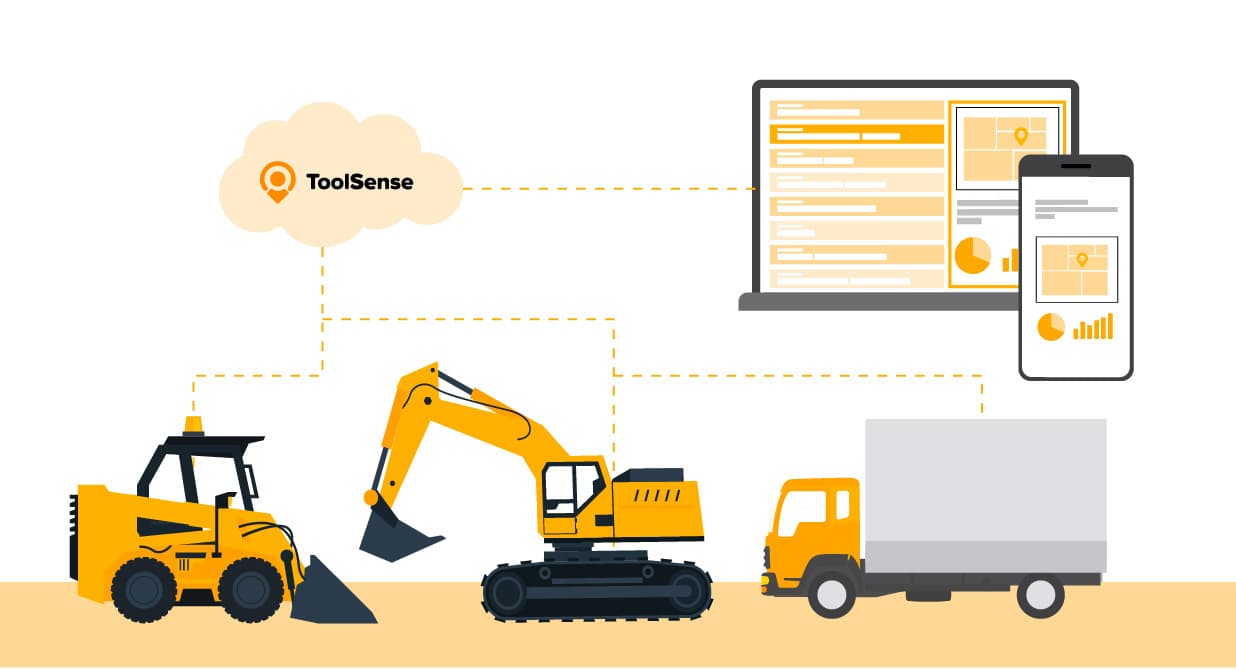
- FSM software pairs a back-office scheduling tool with a mobile app for technicians, so the office and the field are looking at the same job at the same time.
- It overlaps with CMMS, ERP and CRM systems but isn't the same as any of them. FSM's centre of gravity is the on-site visit.
What is field service management?
Field service management is the coordination of a company's resources - people, vehicles, tools and parts - to deliver work at a location the company doesn't own or control. That might be a customer's factory, a remote pumping station, a rooftop full of HVAC units, or a building site that didn't exist last month.
The work itself takes a few recognisable shapes:
- Installations - getting new equipment commissioned and running.
- Repairs - fixing something that has broken, planned or otherwise.
- Preventive maintenance - scheduled service visits meant to stop a breakdown before it happens.
- Inspections and audits - safety checks, compliance sign-offs, condition reports.
- Emergency call-outs - the unplanned 2 a.m. variety, where response time is the whole game.
Plenty of organisations live and die by this work: equipment manufacturers and their dealers, facility services providers, utilities and telecoms, medical and lab-equipment companies, lift and HVAC specialists, and anyone running machines on a construction site. For them, "the field" isn't a side activity - it's where the service actually gets delivered and where the customer forms an opinion.
How the field service process works
Strip away the industry specifics and almost every field service operation runs the same loop.
- The request. A job arrives - a customer reports a fault, a contract triggers a scheduled visit, or a connected machine flags a problem on its own. Someone has to turn that into a work order with enough detail to act on.
- Scheduling and dispatch. This is the hard part. You're matching the job to a technician who has the right skills, is close enough to get there, is free in the right window, and ideally has the part already on the van. Multiply that across dozens of jobs and people and you understand why scheduling is where most field service operations either win or lose the day.
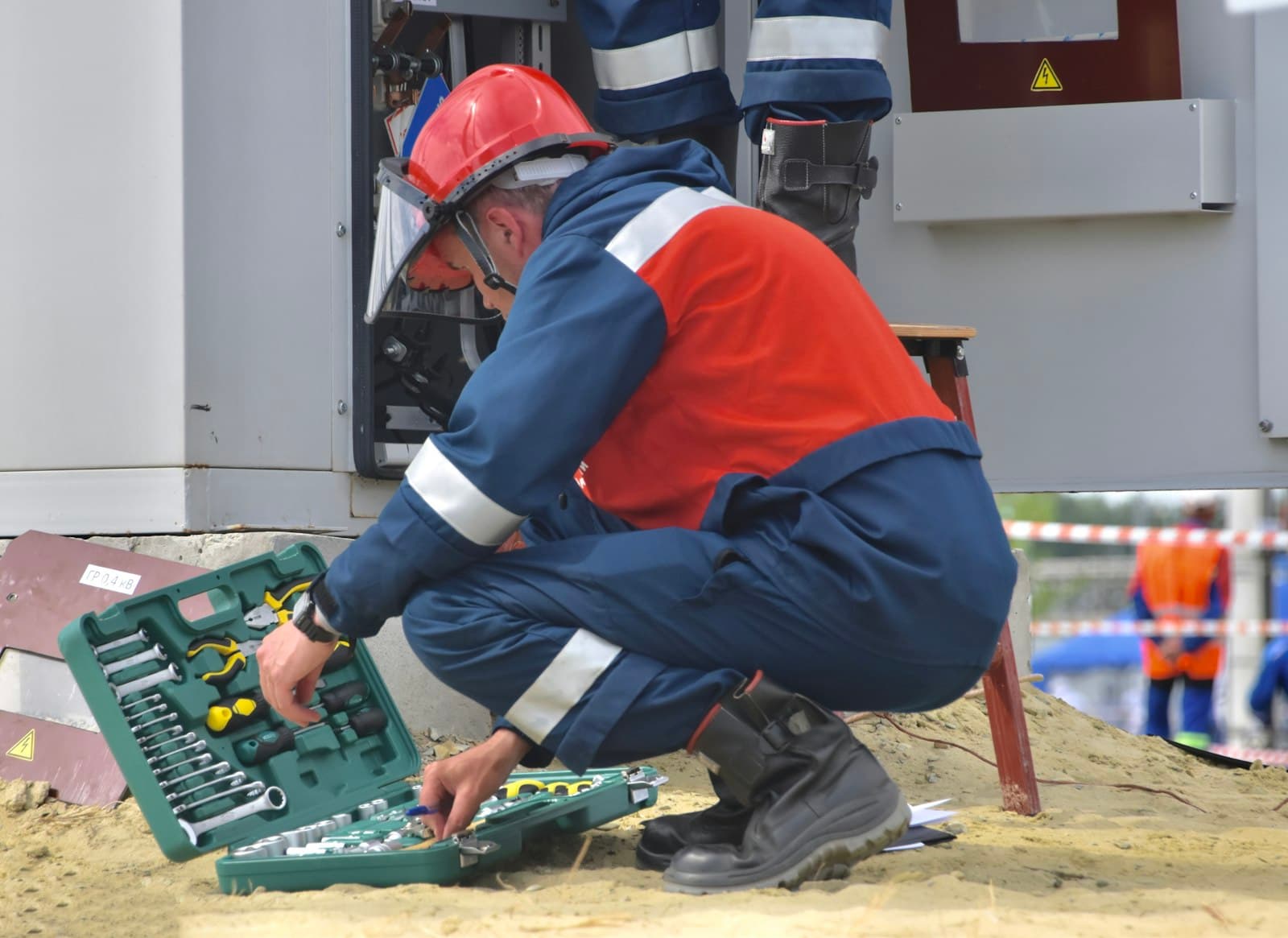
- The visit. On site, the technician needs the job details, the equipment's service history, the right checklist, and a way to record what they did - photos, readings, parts used, a customer signature. Increasingly this all lives in a phone, not a clipboard.
- Close-out and invoicing. The job gets marked complete, the parts and labour are captured, any follow-up is scheduled, and billing can start. Done well, the office knows the job is finished before the technician has left the car park.
The quiet payoff is the data trail. Every closed job adds to the record of that asset and that customer, which makes the next visit faster to plan and easier to get right the first time.
What field service management software does
For a handful of technicians, a shared calendar and a group chat can hold things together. Past that, the coordination starts to break, and that's where FSM software comes in. A capable platform usually brings together:
- Work order management - one source of truth for every job, its status, and its history.
- Scheduling and dispatch - often with route optimisation and skills matching, so the right person takes the shortest sensible path to the job.
- A technician mobile app - job details, asset history, digital checklists, photo capture and sign-off, ideally working offline in a basement with no signal.
- Asset and equipment history - every machine's record of faults, parts and past visits, attached to the job rather than buried in a folder somewhere.
- Parts and inventory - what's on the van, what's in the warehouse, and what needs ordering.
- Customer communication - appointment confirmations, accurate ETAs, and proof of the work performed.
- Reporting and SLA tracking - response times, first-time fix rates, and whether you're meeting the commitments in your contracts.
The thread running through all of it is that the office scheduler and the field technician work from the same live job - not two copies that drift apart over the course of a day. ToolSense handles this layer through ServiceHub, with the equipment record sitting underneath every job.
FSM vs CMMS vs ERP vs CRM
Field service management gets lumped in with several other three-letter systems. They're related, they often share data, but each has a different centre of gravity.
| System | Centre of gravity | The question it answers |
|---|---|---|
| FSM | The on-site visit | Who goes, when, with what - and did the job close? |
| CMMS | The asset's maintenance | What needs servicing, and when? (often in-house) |
| ERP | Money and resources | What did parts and labour cost, and how do we bill it? |
| CRM | The customer relationship | Who is this customer, and what have we sold them? |
The line between FSM and a CMMS blurs the most. A rough rule: a CMMS is built around maintaining your own assets in your own facilities, while FSM is built around sending people out to service equipment - often someone else's, often under a service contract. Many companies end up needing both, which is why the better platforms let the two share the same asset and work-order data instead of duplicating it.
Why companies adopt FSM
The reasons teams move from spreadsheets and phone calls to a real system tend to cluster around a few outcomes:
- More first-time fixes. When the technician arrives with the right skills and the right part, the second visit disappears - and the second visit is where margin goes to die.
- Less time behind the wheel. Smarter scheduling and routing means more wrenching and less driving between jobs.
- Faster cash. Closing and invoicing on the day of the visit, rather than a week later from a stack of paper, shortens the gap between doing the work and getting paid.
- Real visibility. Dispatchers can see where every job and technician stands without a round of phone calls.
- A better customer experience. Accurate arrival windows, clear communication and a record of what was done go a long way.
- Asset intelligence that compounds. Every visit adds to the equipment's history, so patterns - a part that keeps failing, a site that always runs late - become visible over time.
A note worth making: the gains depend on adoption, not just the software. A tool the technicians actually use beats a more powerful one they quietly work around.
Where field service management shows up
FSM isn't tied to one sector. You'll find it wherever a company is responsible for equipment that lives somewhere else:
- OEMs and dealers servicing the machines they sell.
- Facility services and cleaning providers, increasingly managing robot and equipment fleets across many sites.
- Medical, lab and scientific equipment companies, where uptime is non-negotiable.
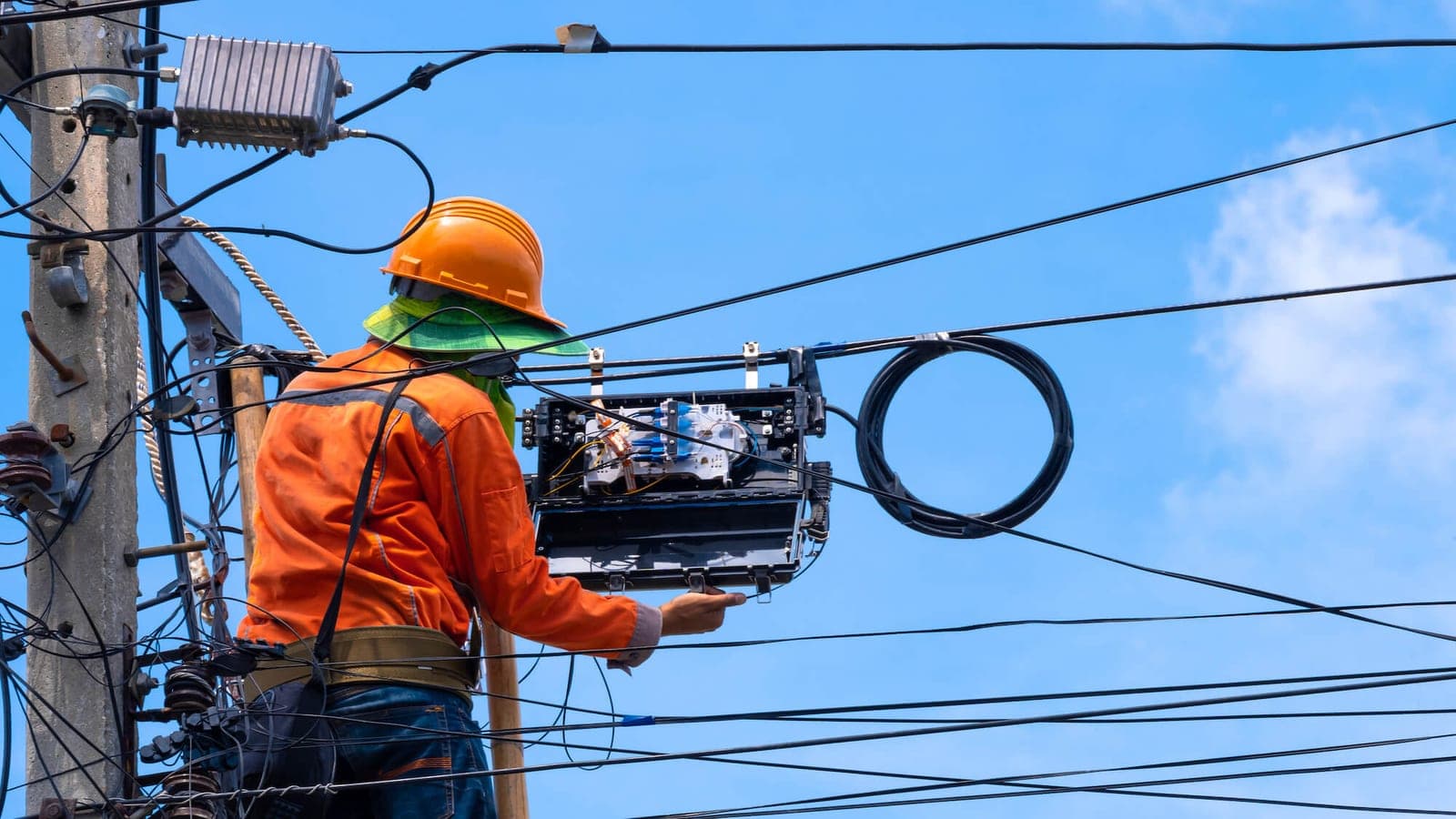
- Utilities, telecom and energy, with large geographic territories.
- HVAC, lifts and building systems, where preventive contracts drive the schedule.
What ties these together is that the equipment is distributed, the work is mobile, and the difference between a good and a bad operation is mostly coordination.
How ToolSense approaches field service
ToolSense comes at field service from the asset side. ServiceHub gives dispatchers and technicians the scheduling, work orders and mobile workflow they need, but it sits on top of a shared asset management layer - so every service visit is tied to the actual machine's history rather than living in isolation. Because it's multi-brand and IoT-aware, a connected machine can raise its own work order when something looks wrong, instead of waiting for a customer to call. For companies that service cleaning equipment, robotics and industrial machines, that link between the field visit and the equipment record is the point.
FAQ
What is field service management in simple terms?
It's how a company organises the work its people do at customer or remote sites - booking the job, sending the right technician, getting it done, and closing it out - so that nothing falls through the cracks between the office and the field.
What is the difference between field service management and a CMMS?
A CMMS is centred on maintaining your own assets in your own facilities. FSM is centred on dispatching people to perform service work on site, often on a customer's equipment and under a contract. They share a lot of data, and many organisations run both.
What does field service management software include?
Typically work order management, scheduling and dispatch, a mobile app for technicians, equipment and service history, parts and inventory, customer communication, and reporting against service-level agreements.
Who uses field service management software?
Equipment manufacturers and dealers, facility services providers, utilities and telecom, medical-equipment companies, HVAC and lift specialists - essentially anyone responsible for servicing equipment spread across many locations.
Is field service management only for large companies?
No. The coordination problem starts as soon as you have more than a couple of technicians and a few jobs a day. Smaller teams often feel the benefit fastest, because a missed appointment or a wasted trip is a bigger share of their week.