Glossary
AI in facility management (AI in FM) is the use of artificial intelligence, such as machine learning and large language models, to analyse asset, sensor and service data, predict maintenance needs, triage faults and requests, and answer operational questions in plain language. It works on the data FM teams already collect: runtime, faults, locations, tickets, inspections and costs.
In Brief
- AI in FM turns operational data into predictions, priorities and answers, so teams act earlier.
- Typical use cases: predictive maintenance, utilisation analysis, robot fleet management, ticket triage, inspections, energy and space analytics, and plain-language questions.
- AI is only as good as its data: connected assets, a single source of truth and clear permissions come first.
- Answers must be verified against source records; data protection and human oversight apply.
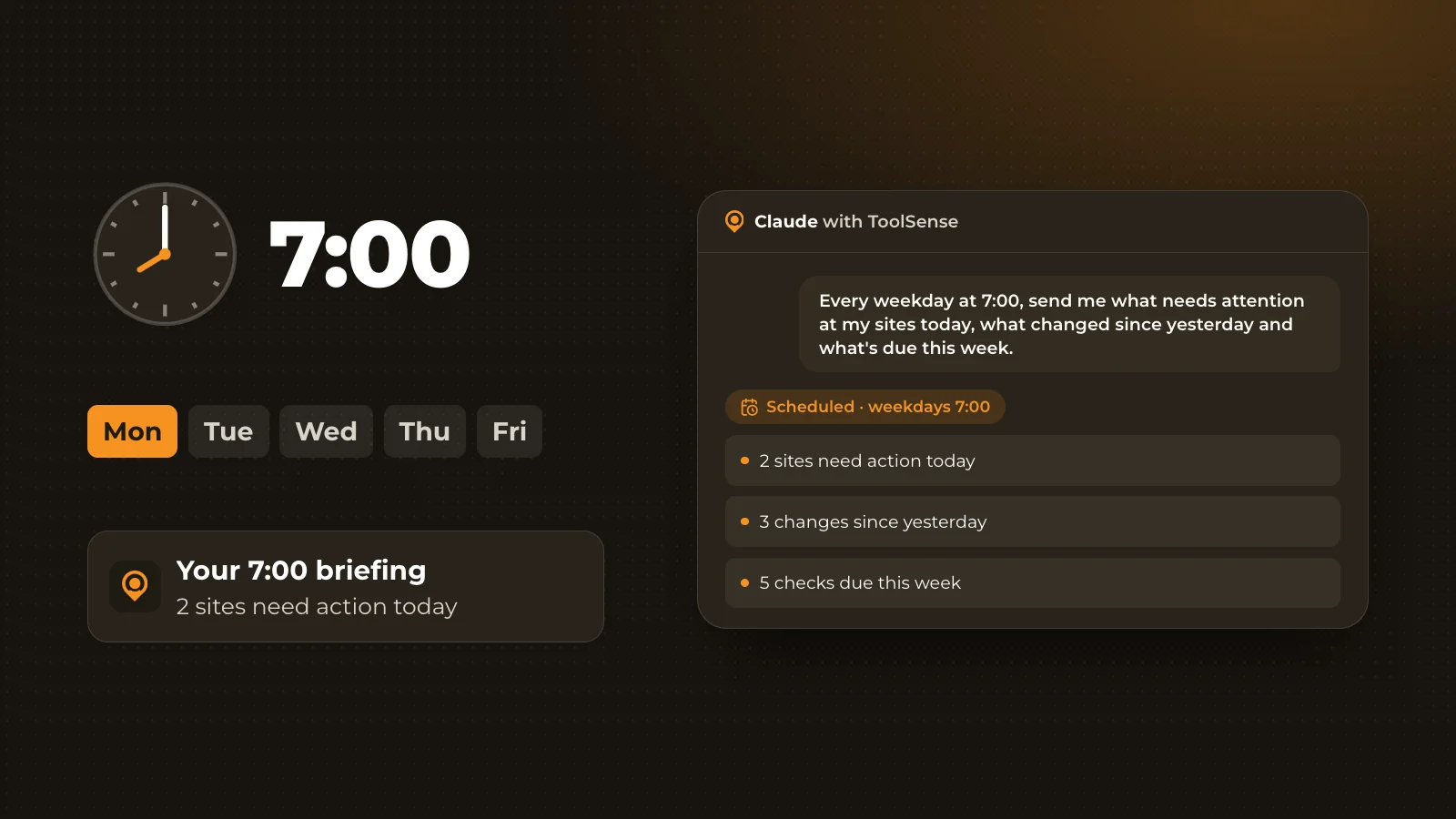
- With ToolSense Just ask, you can ask Claude, ChatGPT or Microsoft Copilot about your live ToolSense data.
What Is AI in Facility Management?
Machines, vehicles, robots and buildings all produce data: operating hours, fault codes, service reports, inspection dates, costs and locations. AI in FM uses that data in two ways. Machine learning and analytics spot patterns, such as a rising fault rate or equipment sitting idle. Generative AI and AI assistants let people ask questions in natural language and get answers from their own records instead of building a report. An assistant that also plans and carries out steps on its own is called an AI agent.
Where AI Helps in Facility Management Today
- Predictive maintenance: runtime, IoT and fault data show when a machine is likely to need service, so maintenance is planned before a breakdown. See our predictive maintenance guide.
- Utilisation analysis: AI compares how machines are actually used across sites, flags idle equipment and helps redeploy it before new machines are bought or rented.
- Cleaning-robot fleet management: robots from different brands report errors in their own codes. AI translates them into plain language, sorts urgent from minor and turns them into tickets for the right person. More in our article on robot fleet management.
- Ticket and work-order triage: incoming fault reports are categorised, prioritised and matched to the right asset, site and technician.
- Inspections and compliance: AI highlights overdue or upcoming checks and helps bundle them into fewer site visits.
- Energy and space analytics: consumption and occupancy data show where energy is wasted and which areas are under- or over-used.
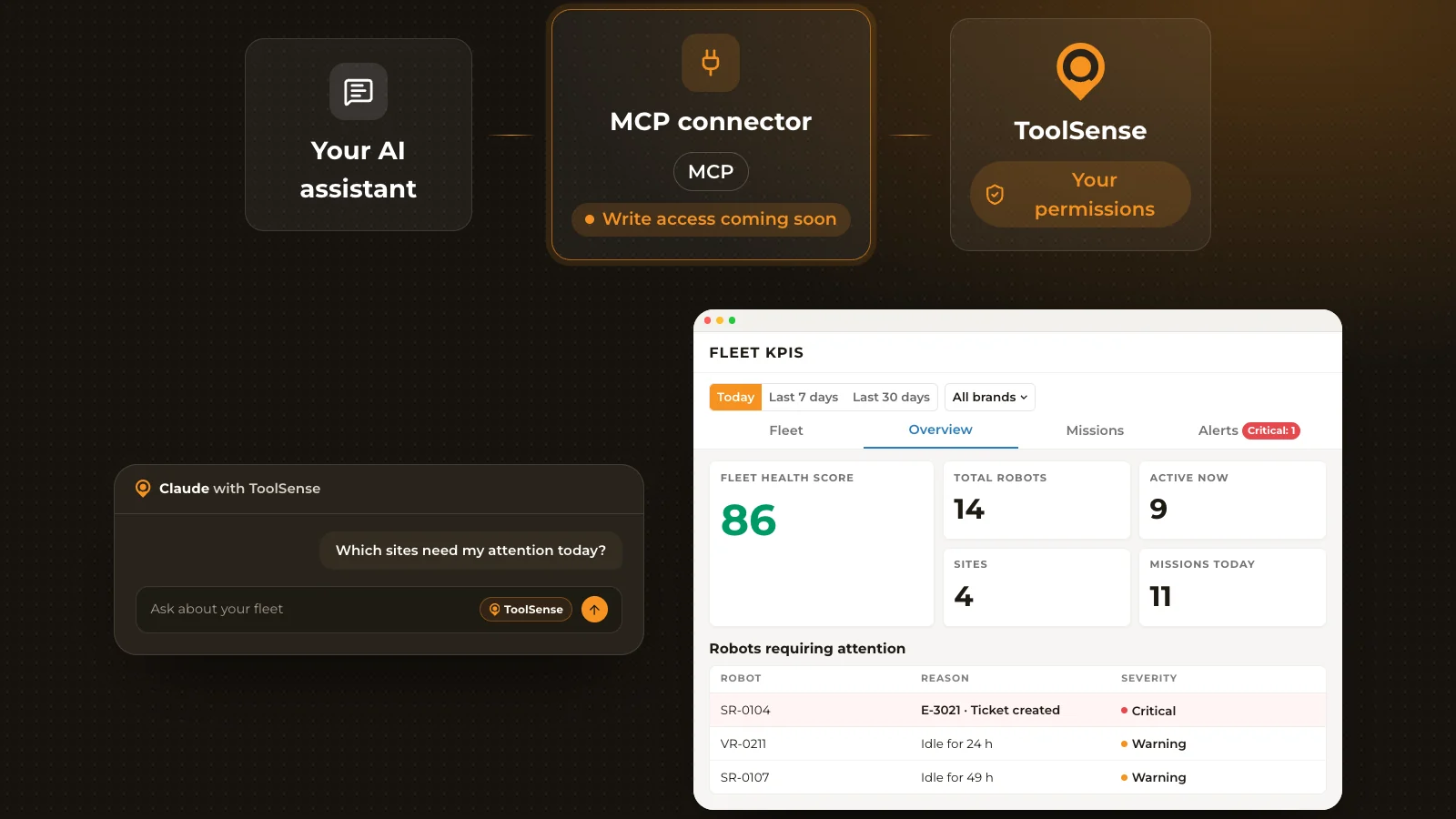
- Questions in plain language: AI assistants answer questions such as "Which sites need my attention today?" directly from live operational data.
What AI in Facility Management Needs
AI does not fix missing or scattered data. Three foundations come first:
- Connected, clean asset dataevery machine, vehicle and robot recorded once, with correct location, availability, service history and documents. This single source of truth is what the AI reads.
- IntegrationsIoT trackers, robot platforms and business systems feed one data model instead of separate spreadsheets.
- Clear permissionsAI should see only what the person asking is allowed to see, by role and site.
How to Get Started
- 1Pick one use case with a visible cost, such as idle rented machines or recurring robot errors.
- 2Check the data it needs and close the gaps.
- 3Define what you will measure, such as response times or rental costs, and run it on one site or region.
- 4Scale to further sites and use cases once the results hold.
Limits and Risks of AI in Facility Management
- Data qualitywrong or outdated records lead to wrong answers.
- Hallucinationslanguage models can state incorrect things confidently. Verify important answers against the source record before acting.
- Data protection and GDPRlocation and usage data can relate to employees. Clarify the legal basis, data minimisation, processing agreements, where data is processed and whether it is used for model training.
- Works councilin Germany and other countries, systems that can monitor employee performance usually require the works council's involvement.
- Human oversightAI prepares decisions; safety-critical work, purchasing and personnel matters stay with people.
AI at ToolSense
ToolSense is the FM Operations Platform for facility management companies. Every answer comes from the same live data your team already works with: runtime, faults, location, service history and the machine's own documents.
Live today:
- AI-powered analytics turning runtime, cost and fault data into utilisation and lifecycle insight.
- Error codes from every robot brand translated into plain language, and routed automatically as tickets.
- Live data from 100,000+ connected devices feeding dashboards, rules and reporting.
Coming:
- AI Fleet Assistant: before new capex is signed off, checks whether idle machines elsewhere can cover the need.
- AI Support Manager: when a machine stops, answers from that machine's own manual, IoT data and service history and walks the operative through the fix.
Just ask: with Just ask, you connect ToolSense to Claude, ChatGPT or Microsoft Copilot and ask about your machines, sites, tickets and inspections in your own words. The connection is built on MCP (Model Context Protocol), the open standard for connecting AI assistants to business software. Everyone signs in with their own ToolSense login and sees only what their permissions allow. Just ask is read-only today; write access is coming soon. For examples, see 10 questions to ask your fleet.
FAQ
How is AI used in facility management?
AI is used to predict maintenance from runtime and sensor data, find idle equipment, translate robot error codes, triage tickets, plan inspections, analyse energy and space use, and answer operational questions in plain language.
Can AI replace facility managers?
No. AI takes over repetitive analysis, such as reading fault codes or finding overdue checks. Facility managers still decide, lead people and stay responsible for safety and compliance.
What data do you need for AI in facility management?
A reliable record of every asset with location, availability, service history, inspections and costs, ideally complemented by IoT data such as runtime and fault codes.
Is AI in facility management GDPR-compliant?
It can be, depending on the setup: check the legal basis, data minimisation, processing agreements, where data is processed and retained, and whether it is used for model training. In Germany, the works council usually has to be involved.
Can I ask ChatGPT about my facilities?
Yes, if your operational data is connected. With ToolSense Just ask, you can ask Claude, ChatGPT or Microsoft Copilot about your machines, sites, tickets and inspections; answers come from your live ToolSense data, read-only and with your own login.