Equipment Management
Run a large facility and the details add up fast: space use, maintenance, equipment, utilities, service requests — each one needs reliable data behind it. Computer Aided Facility Management (CAFM) software is what pulls those threads together. This article covers what CAFM software actually does, which buying criteria matter, and how the leading solutions stack up for facility management teams. If your team is small and internal, ToolSense also handles in-house facility management software workflows without the weight of a full enterprise CAFM rollout.
Key Takeaways
- Comprehensive Understanding of CAFM: Facility management software is essential for efficient facility management, encompassing a wide range of functionalities including asset and equipment management, space planning, and maintenance management.
- Importance of Choosing the Best CAFM Software: Selecting a CAFM solution requires careful consideration of specific organizational needs, integration capabilities, ease of use, and support provided by the software.
- Top CAFM Solutions Overview: The article provides a detailed comparison of the top 5 CAFM software solutions, highlighting their unique features, pros, cons, and pricing to aid in making an informed decision.
Our Top Picks
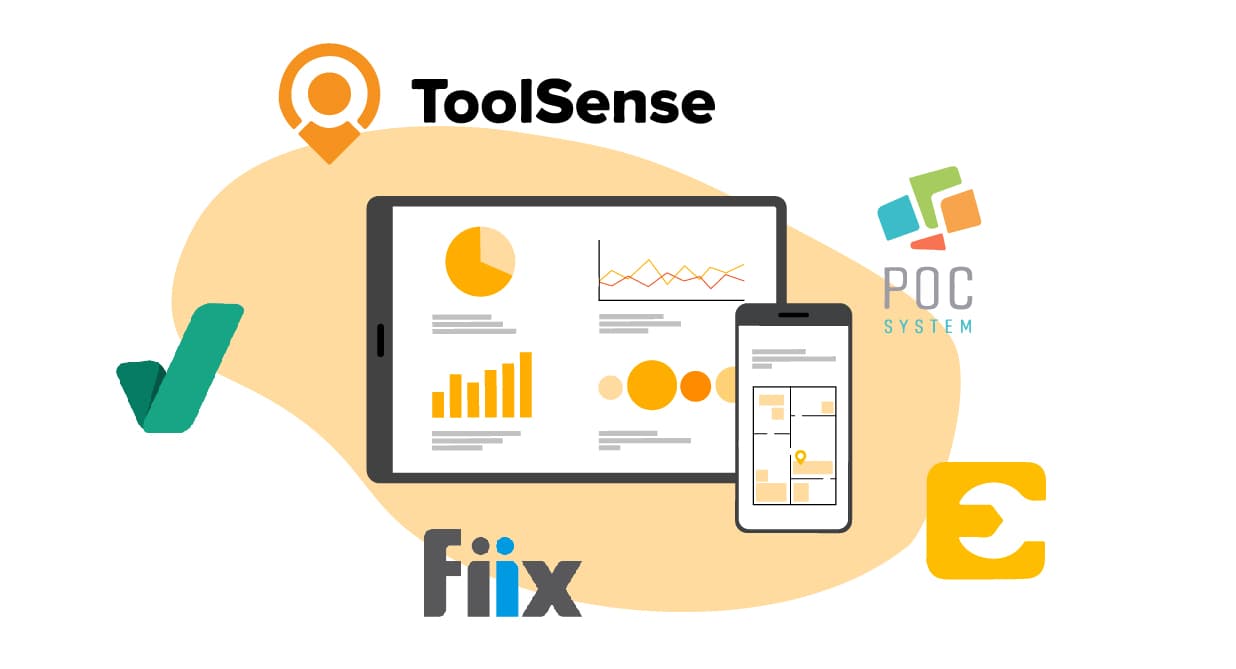
- ToolSense The best all-in-one solution
- eMaint CMMS Logo Comprehensive maintenance management
- POC System Logo Focus on space optimization
Key Features of Computer Aided Facility Management Software
CAFM systems pack in a lot of features: space management, asset management, maintenance management, move management, capital project management, lease administration, real estate portfolio management, and environmental sustainability analysis. Which ones matter depends entirely on what your organization is trying to do. Here’s what each one covers.
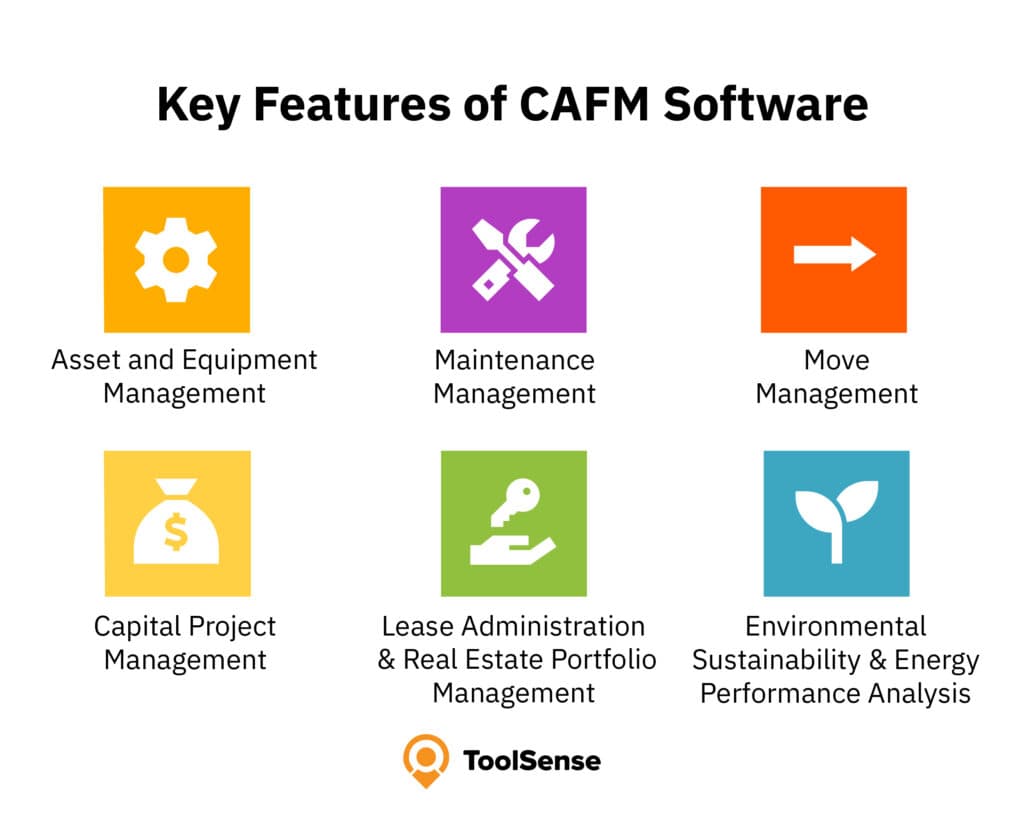
Space Management covers tools for optimizing how space gets used, tracking vacancies, and planning for future needs. It earns its keep at companies with large physical footprints or fast growth. For everyone else, it’s rarely the deciding factor.
Asset and Equipment Management gives you one central place to track every asset and piece of equipment you own. Facility managers can watch condition, location, and value in real time — which keeps assets in better shape, extends their working life, and brings costs down.
Maintenance Management is the backbone of most facility management software. It schedules routine repairs and preventative work, manages work orders, and coordinates other services. Done well, it keeps equipment running at full efficiency, cuts downtime, and saves on repair spend.
Move Management handles the logistics of relocating people and assets inside an organization — planning, scheduling, and executing moves with as little disruption to operations as possible.
Capital Project Management supports large-scale projects from start to finish: budgeting, scheduling, tracking progress, and allocating resources.
Lease Administration and Real Estate Portfolio Management give you tools to manage leases, track costs, oversee property portfolios, and stay compliant with lease agreements.
Environmental Sustainability and Energy Performance Analysis has gone from nice-to-have to a real selling point. These features track and reduce environmental impact, monitor energy consumption, and help put sustainable practices in place across your facilities.
Buyers Guide: Crucial Factors to Consider When Choosing The Best CAFM Software
Several things shape the right CAFM choice for your organization. Start with the feature set — it has to line up with what you actually need, which usually means some mix of:
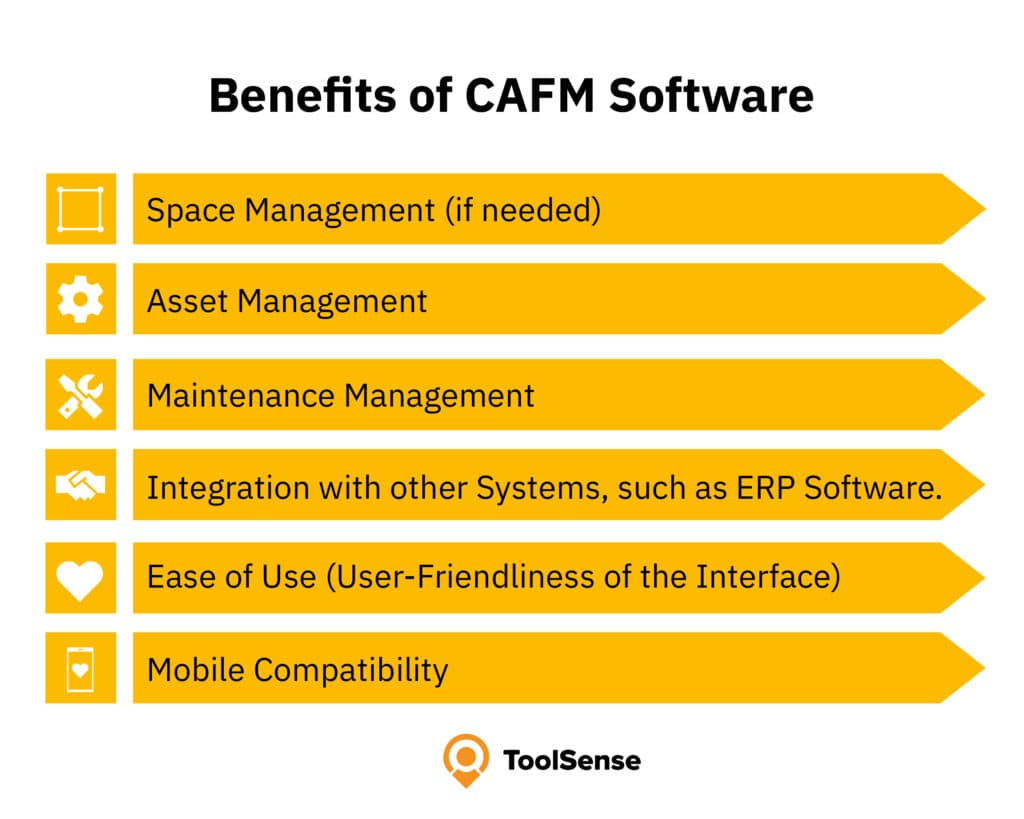
- Space management (if needed)
- Asset management
- Maintenance management
- Integration with other systems, such as ERP software.
- Ease of use (user-friendliness of the interface)
- Mobile compatibility
Deployment is the next call. Some solutions install on-premise, others run on the web or in the cloud, and a few offer a hybrid of both. Your existing infrastructure and internal preferences will usually settle which one fits.
Integration deserves close attention too. A CAFM platform that plugs cleanly into the systems you already run — ERP, CAD (computer aided design), or accounting software — keeps business processes flowing and avoids the friction of duplicate data entry.
Finally, look at the support behind the product. Customer reviews and reported satisfaction tell you whether a vendor backs its software with reliable, responsive help — and that’s often what separates a good fit from a frustrating one.
Introducing the Top CAFM Software Solutions
The sections below break down some of the strongest CAFM solutions on the market right now. Each brings a different mix of features and strengths to facility management, so it’s worth looking at them one at a time.
ToolSense: Your Comprehensive Computer Aided Facilities Management System
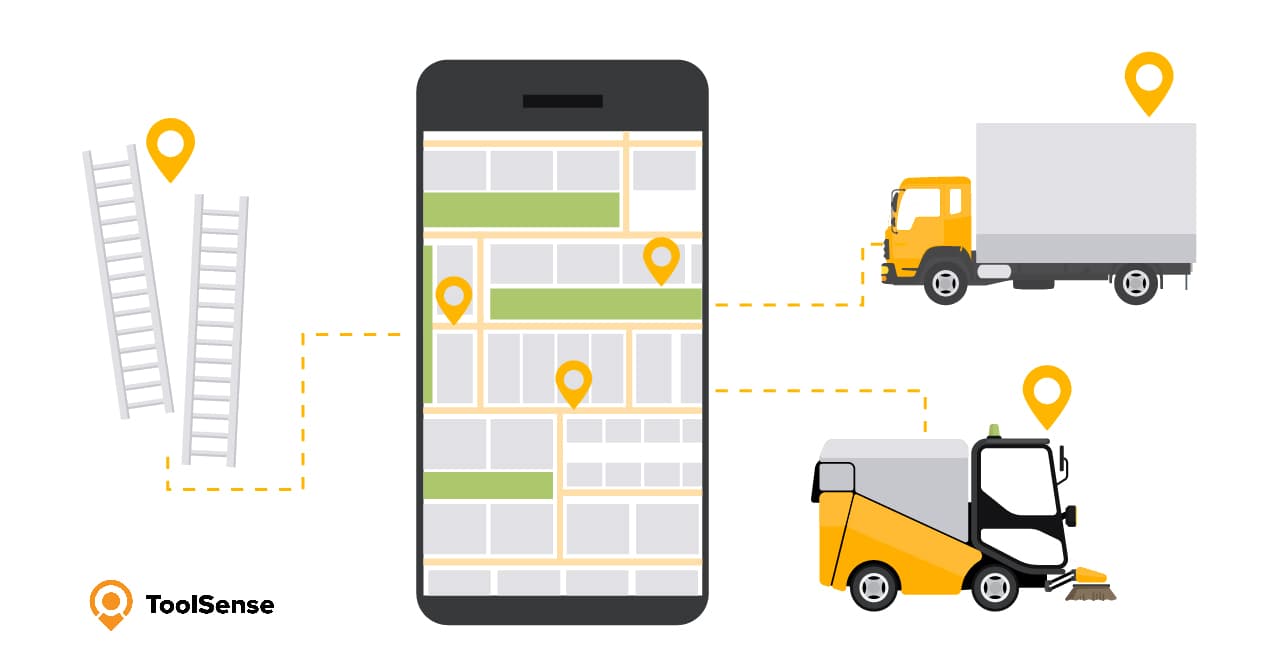
ToolSense is a user-friendly CAFM platform built around real-time tracking of assets, inventory, and facilities. Add analytics tools plus the ability to digitize and automate asset-related workflows, and you get a single system for managing equipment, sharpening communication, and taking routine processes off people’s plates.
A big part of the appeal is how well ToolSense integrates with existing systems — handy for teams that want to tighten operations without tearing up their current workflow. It holds its own as an all-rounder: solid feature coverage, an interface people can actually use, and support that shows up when you need it. Security is a strong point too, so your data stays protected. Whether you’ve managed facilities for years or you’re new to it, ToolSense is a dependable way to streamline operations, lift productivity, and make decisions grounded in real data.
Features:
- Real-Time Asset and Inventory Tracking
- Advanced Analytics Dashboard and Reporting Tools
- Automated Workflows for Asset and Maintenance Management
- Mobile Accessibility for On-the-Go Management
- Customizable Reports for In-depth Analysis
- Vendor Management for Streamlined Operations
-
Preventive Maintenance Scheduling
- Comprehensive Asset Lifecycle Management
- Fleet Management
- Work Order Management
- Inventory Management
- Document Storage and Safety Compliance Features
- Custom Checklists and Notifications
- Seamless Integrations and Data Import/Export Automation
- IoT and Telematics Platform Compatibility
Pros:
- Extensive tracking and management functionalities
- Facility management and maintenance processes are greatly enhanced
- Real-time data insights and analytics for informed decision-making
- Desktop and Mobile Compatibility
- Seamless Integration with Existing Systems
- Data Security and Compliance
- User-friendly Interface for Easy Navigation
- Available in 100+ languages
Cons:
- While the software is highly customizable, it may be overwhelming for users who prefer a more straightforward, out-of-the-box solution.
Pricing:
ToolSense offers a free 30-day trial and a free demo tour as well. The exact monthly
pricing is tailored to the unique needs of each client and is available upon request
.
Overall Rating:
- Features: 4.5/5
- Ease of Use: 5/5
- Customer Support: 4.5/5
- Security: 4.5/5
eMaint CMMS
eMaint Computerized Maintenance Management System (CMMS) is a capable CAFM tool built first and foremost around maintenance. It bundles inventory management, asset management, and maintenance scheduling to keep operations tight and assets running longer. The software also automates work orders, tracks maintenance history, and assigns task priority — a good match for organizations that want to squeeze more out of their maintenance operations.
Key Features:
- Comprehensive Maintenance Management
- Automated Work Orders
- Asset Tracking and Maintenance History
- Inventory Management
- Lease Management
Pros:
- Comprehensive suite of maintenance management features
- Capability to automate work orders
- Asset tracking and maintenance history for enhanced asset longevity
Cons:
- Limited customization options
- Requires frequent updates for optimal performance
Pricing:
eMaint CMMS offers a free demo for prospective users to explore its features and capabilities. Offers several pricing tiers: Team (starting at $69 per user, per month), Professional (starting at $85 per user per month), Enterprise (custom quote, contact for pricing).
Overall Rating:
- Features: 4/5
- Ease of Use: 3.5/5
- Customer Support: 4/5
- Security: 4.5/5
POC System
POC System takes a visual approach to managing office space and real estate. It’s best known for its integrated workplace management system and the way it tightens up day-to-day facility processes. With space utilization as its main focus, it’s a natural pick for managing commercial spaces.
Key features:
- Interactive space management system
- Efficient seating allocation
- Streamlined facility management processes
- Visual space planning software
- Customizable reports
Pros:
- Streamlines facilities’ operations: Simplify and automate processes for more efficient management.
- Combines space planning management, maintenance management, and data analysis: Get a comprehensive solution for all your facility management needs.
- Customizable reports: Tailor your reports to your specific needs for in-depth analysis.
Cons:
- Limited customization options: While POC System offers customizable reports, other aspects of the software may have limited customization options.
- Requires frequent updates: To ensure optimal performance, regular software updates may be necessary.
Pricing:
POC System is available at a competitive price of $1.00 per month. For a hands-on experience of the software and its features, POC System offers a free demo upon request.
Overall Rating:
- Features: 3.5/5
- Ease of Use: 4/5
- Customer Support: 3.5/5
- Security: Not rated
Fiix
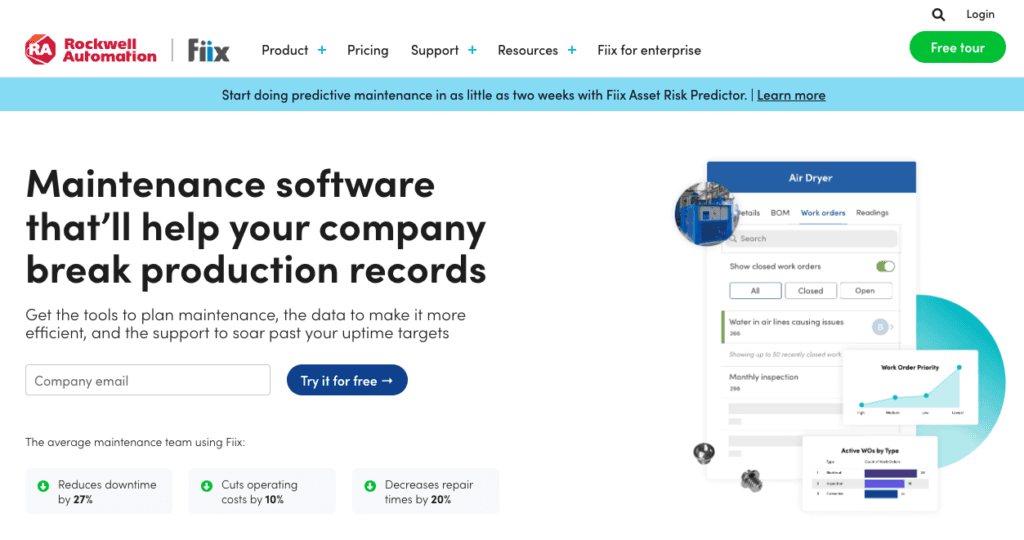
Fiix is a cloud-based CMMS aimed squarely at facility maintenance. Two things stand out: it’s quick to implement, and its mobile access makes it genuinely useful out in the field. The feature set is broad enough to smooth out service processes and stretch the life of your assets, which makes it a strong option for repair and maintenance work across buildings and facilities.
Key Features:
- Asset Management
- Work Orders
- Automated PMsInventory Management
- Lease Management
- CAD Integration
Pros:
- Comprehensive range of features: Fiix offers a wide array of features to cater to all your facility management needs.
- User-friendly interface: The software’s interface is intuitive and easy to navigate, even for those who are not tech-savvy.
- Mobile app: Fiix’s mobile app allows you to manage your facilities on the go, offering flexibility and convenience.
Cons:
- Limited customization options: While Fiix offers a range of features, there may be limitations in terms of customization.
- Requires frequent updates: To ensure optimal performance and take advantage of new features, regular software updates may be necessary.
Pricing:
A free demo is available upon request. Offers multiple plans: Free (Limited users), Basic ($45 per user, per month), Professional ($75 per user, per month), Enterprise (Custom pricing, schedule a custom demo).
Overall Rating:
- Features: 4/5
- Ease of Use: 4/5
- Customer Support: 4/5
- Security: 4.5/5
GoAudits
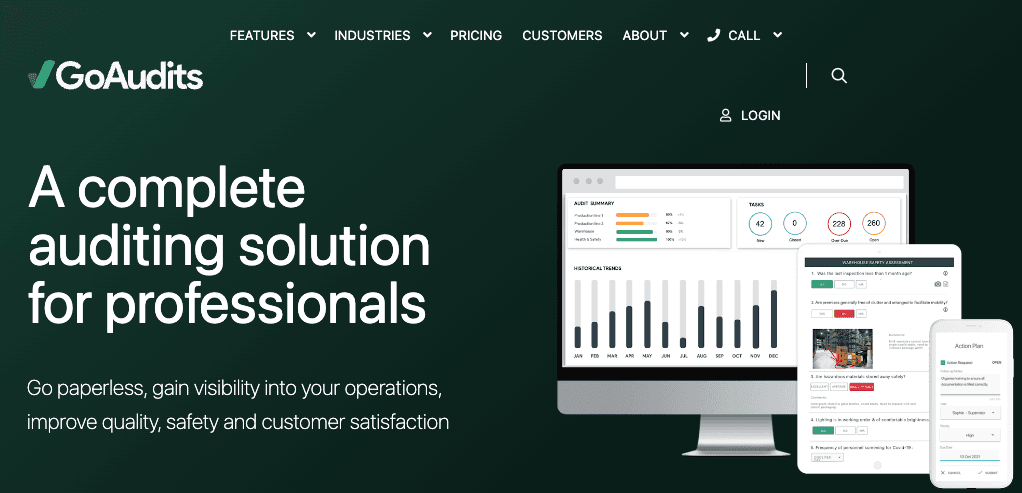
GoAudits is an inspection platform that takes the friction out of auditing. Teams can build custom checklists, capture data digitally, and generate detailed reports with real-time insight. The mobile app means audits and inspections happen wherever the work is, not just at a desk.
Key Features:
- Custom checklists for audits
- Real-time reports
- Asset Tracking and Management
- Maintenance Scheduling
- Inventory Management
- QR Code Scanning
Pros:
- Streamlines audit processes: Simplifies and automates processes for more efficient management
- User-friendly mobile app: Allows for convenient and accessible audits and inspections
- Real-time inspection insights: Provides comprehensive reports with real-time insights for improved decision-making
Cons:
- Limited customization options
- Requires frequent updates: To ensure optimal performance, regular software updates may be necessary
- Lack of software usage tracking
- Absence of automated detection of assets
- No internal device visibility
- No uptime monitoring or notification
Pricing:
After a 14-day free trial. GoAudits pricing details are not publicly available.
Rating:
- Features: 3.5/5
- Ease of Use: 4/5
- Customer Support: 3/5
- Security: 4/5
What is CAFM? – CAFM Meaning
Computer Aided Facility Management (CAFM) is a tool for running the many administrative operations inside a facility. In practice the scope reaches further than that, taking in:
- Building infrastructure such as lighting and HVAC
- Facilities maintenance management
- Services management
- Vendor Management
- Asset & Equipment Management
- Asset Tracking
- Space planning
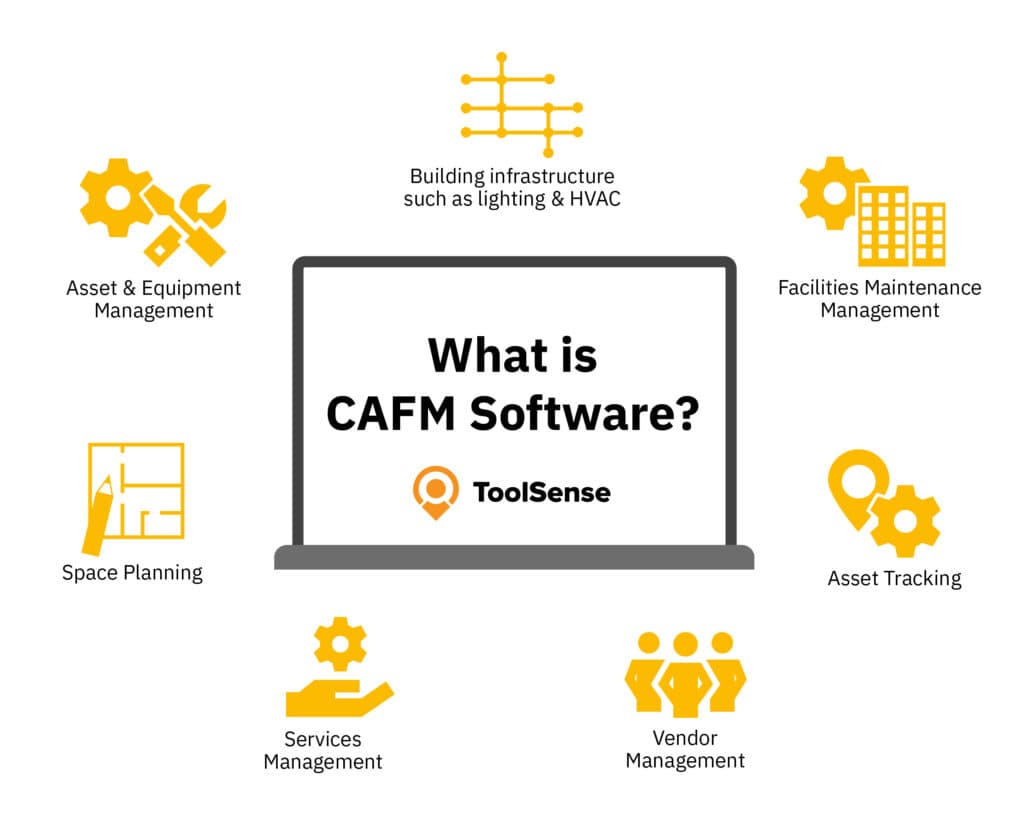
CAFM software exists to line up the planning side of all this with what the business actually needs, which is why it sits at the center of a facilities manager’s toolkit. It gets confused with CMMS, IWMS, and EAM software, but it does its own job: CAFM streamlines administrative duties and infrastructure management, EAM concentrates on physical assets, and CMMS zeroes in on maintenance activity.
In reality, one platform often plays all three roles at once — CAFM, EAM, and CMMS — because facility management is so interconnected. Integrated solutions give you a single view of every asset, smoother workflows, and a stronger basis for strategic decisions, which is exactly why organizations gravitate toward them.
The Impact of CAFM Software: Top Benefits
CAFM software touches nearly everything in facilities work, from infrastructure and budgets to ongoing maintenance. Here are the benefits that tend to matter most once it’s in place.
- Improved Organizational Communication: With CAFM software, communication across different departments and teams becomes easier. The software can automate routine tasks such as scheduling maintenance or room reservations, reducing the potential for errors and miscommunication. It also provides a central hub for all facility-related information, making it easier for all employees to access the resources they need.
- Data-Driven Decision Making: One of the most powerful advantages of CAFM software is its ability to provide actionable insights based on real-time data. This can help facility managers monitor key performance indicators (KPIs), optimize maintenance operations, track energy consumption, and plan for future space needs. By making decisions based on data, organizations can improve their operations, save costs, and enhance the overall management of their facilities.
- Enhanced Productivity: By automating routine tasks and processes, CAFM software frees up time for facility managers to focus on strategic planning and decision making. This not only improves productivity but also allows for a more proactive approach to facility management.
- Cost Savings: By providing a clear overview of all assets and their condition, CAFM software can help organizations identify areas where costs can be reduced. This could be through more efficient use of space, reducing energy consumption, or prolonging the lifespan of equipment through timely maintenance.
- Risk Management: CAFM software can also play a crucial role in risk management. By providing real-time data on all assets and their condition, it can help identify potential issues before they become serious problems, allowing for timely intervention and preventing costly downtime.
- Sustainability: With features that help monitor and reduce energy consumption, CAFM software can also contribute to an organization’s sustainability goals. By using resources more efficiently and reducing waste, organizations can reduce their environmental impact while also saving costs.
Put it all together and CAFM software can change how an organization runs its facilities — sharper efficiency, better communication, and lower costs across the board.
Comparison and Conclusion of The Best CAFM Software
There’s no shortage of strong CAFM systems, and each leans into a different strength:
- ToolSense, known for its real-time tracking capabilities, is a strong contender in the mix.
- eMaint CMMS is notable for its focus on maintenance management.
- POC System makes its mark with its focus on space optimization.
- Fiix is appreciated for its user-friendly interface.
- GoAudits stands out as an efficient inspection platform.
CAFM software has become core to efficient facility management as the pace of business keeps picking up. By bringing asset management, space optimization, and maintenance under one roof, it helps organizations save time, cut costs, and run more efficiently.
With so many options on the table, the smart move is to weigh each one carefully — features, deployment, integrations, and support — and pick the fit that matches your organization’s specific needs.
The bottom line: CAFM software is a serious asset for facilities managers, with a feature range that streamlines operations, saves time, and trims cost. Between ToolSense, eMaint CMMS, POC System, Fiix, and GoAudits, there’s a solution that maps to almost any set of requirements. The sooner you make the move, the sooner facility management gets easier.
The software solutions and the respective rankings presented in this article reflect our editorial assessment and customer context from ToolSense resources. Buyers should still validate each option against their own facility portfolio, integrations, budget and implementation requirements.
FAQ
What is CAFM software used for?
CAFM software is used to plan, execute and monitor activities related to space and workplace management, asset management, reactive and preventative maintenance, operational facility services, room reservations and customer service requests. It allows businesses in the facility management industry to take control of their enterprise asset management , optimize internal space management and floor plans, as well as improve their productivity and efficiency.
What is the most popular CAFM software?
The most popular CAFM software is FM:Systems, followed by HippoFM, iOFFICE, ARCHIBUS, and Planon Universe.
What are the tasks of CAFM?
CAFM enables businesses and facility managers to store and access asset, utilization, maintenance, and work order information in a central database. It provides real-time data for informed decision making from any location.
What is the difference between CAFM and CMMS?
CAFM software provides automation of several aspects of facility management, while CMMS software focuses specifically on the maintenance operations and is usually included in the CAFM package.
How does CAFM software integrate with CAD drawings?
CAFM software integrates with CAD drawings to facilitate space management, scenario planning, layout plans, flexible workplaces, moves and technical management.
What is the best software for facility management?
The best facility management software often depends on specific organizational needs, but some of the top contenders include ToolSense, eMaint CMMS, and Fiix. These platforms offer comprehensive features such as asset management, maintenance scheduling, property management, and space optimization, making them highly effective for enhancing facility management operations.
What is the CAFM tool?
A CAFM tool, or Computer Aided Facility Management tool, is a facilities management software designed to assist facility managers in efficiently managing the various components of a facility, such as space utilization, asset management, and maintenance operations. By providing real-time data and analytics, CAFM tools enable organizations to optimize their facility management processes, improve resource allocation, and enhance overall operational efficiency.
What is an example of CAFM?
An example of CAFM software is ToolSense, which offers comprehensive features such as a real-time asset management software, maintenance management, and space optimization. This platform helps facility managers streamline operations, enhance productivity, and make data-driven decisions to improve overall facility management efficiency.