Equipment Management
When a company owns a lot of physical assets, keeping tabs on every machine, tool, and vehicle gets harder than it sounds. And when you don't know where your equipment is, the cost shows up everywhere — in delayed jobs, blown schedules, and lost revenue. That is the case for asset tracking. Done well, it tightens your operations and saves money over time. The harder question is which tracker actually fits your company, and that comes down to a handful of factors we'll work through below.
Key Facts
- With an equipment tracker, you can keep track of all your assets’ location data.
- Tracking systems can find misplaced or stolen equipment and aid in the distribution process.
- Vehicle tracking can help monitor personal or company cars, fleets of vehicles, and vehicle usage by employees.
- GPS, Bluetooth, RFID or QR code technologies are most often used in asset tracking.
- All of these methods have certain advantages and disadvantages, so that the perfect solution depends on what type of asset you are looking to track.
- ToolSense, a modern asset management solution, supports all types of equipment tracking and offers an easy-to-use platform to manage your assets.
The Different Types of Tracking Devices for Equipment
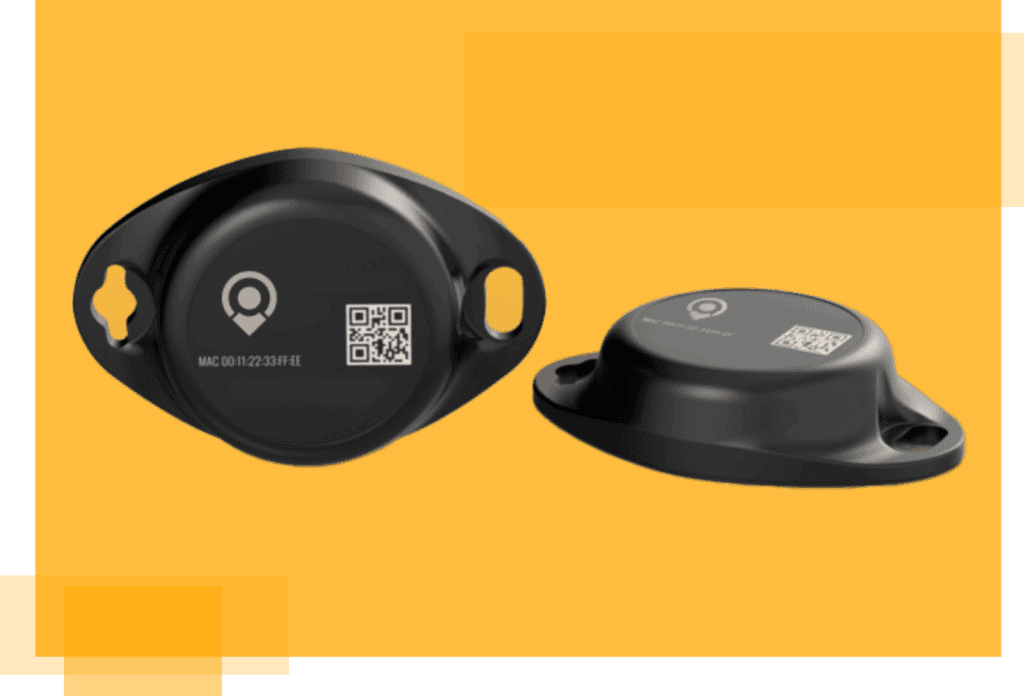
Picking the right system starts with knowing what's on the table: where each type of device is used, and how. Four technologies cover most equipment tracking — GPS, Bluetooth, RFID, and QR codes. Any of them can track equipment, though they don't all deliver real-time location.
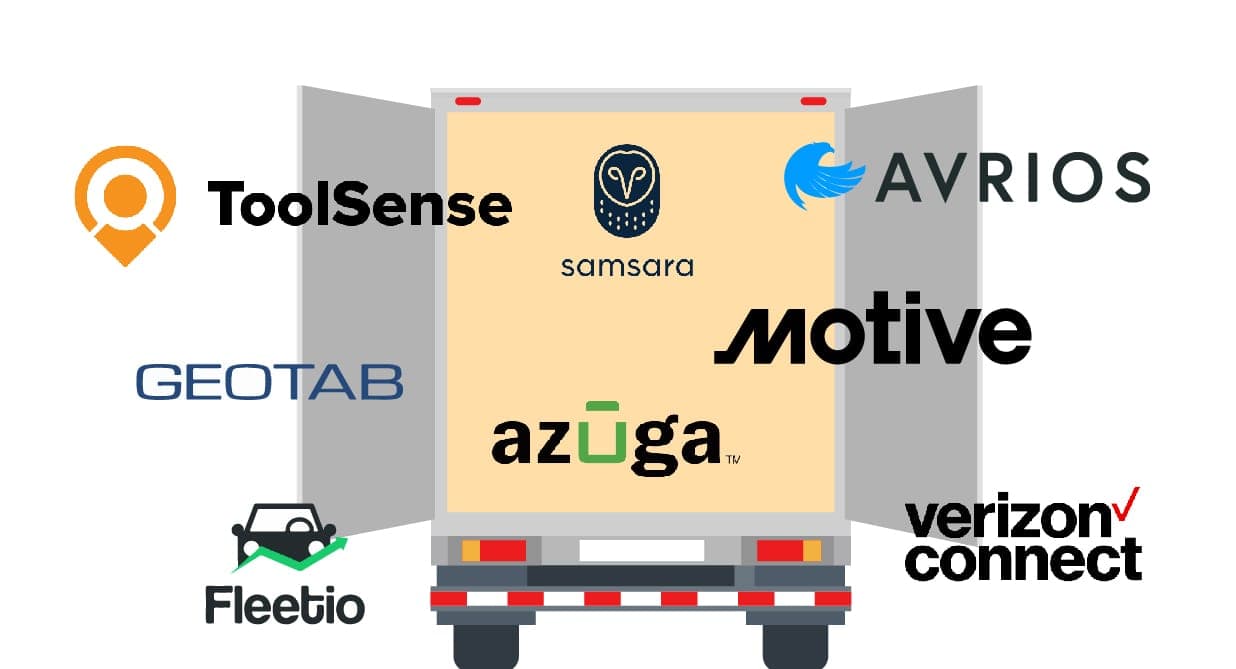
Use case matters just as much as technology. GPS in a phone, pet trackers, and keychain tags like the Apple AirTag or Tile are built for personal use — one person, one device. Commercial asset trackers are a different animal. ELD devices and OBD GPS trackers typically plug into dedicated software so that several employees can work from the same data.
Tracker Types: (Cellular) GPS Trackers
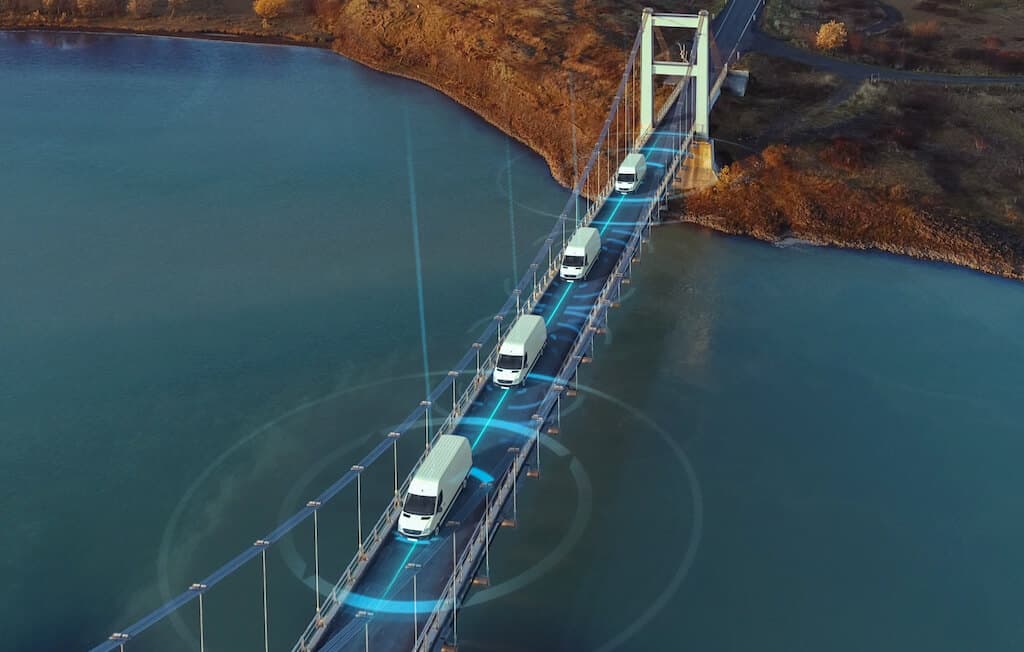
GPS — the Global Positioning System — is a network of satellites orbiting the planet. Those satellites broadcast signals that GPS devices, whether dedicated trackers or phones, pick up to fix their own location and plot it on a digital map.
The big advantage is reach: GPS works worldwide, so an asset can be located regardless of the country or region it sits in. The limits are physical. GPS signals don't pass through walls or solid structures, and atmospheric interference can creep in, which sometimes leaves you with accuracy off by 5 to 10 metres. No calibration is needed, anyone can use it on demand, and because it reports in real time, you always know an asset's current position — which is what makes it reliable for tracking and navigating vehicles. The trade-off is power draw: depending on the device, a GPS tracker can run through its battery faster than other options.
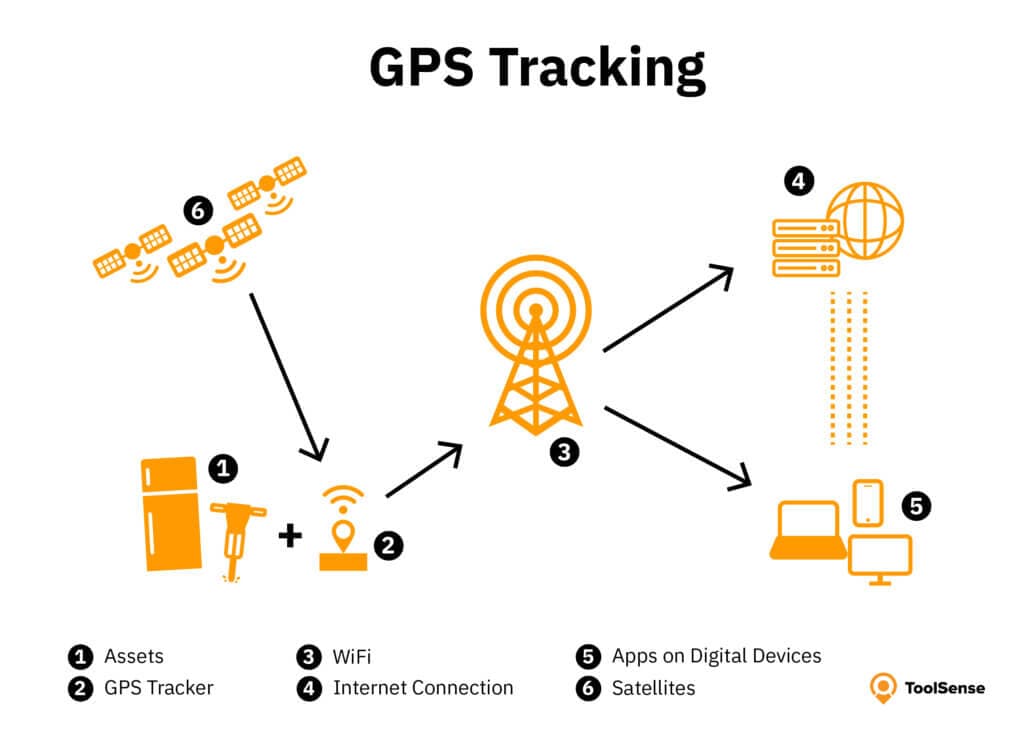
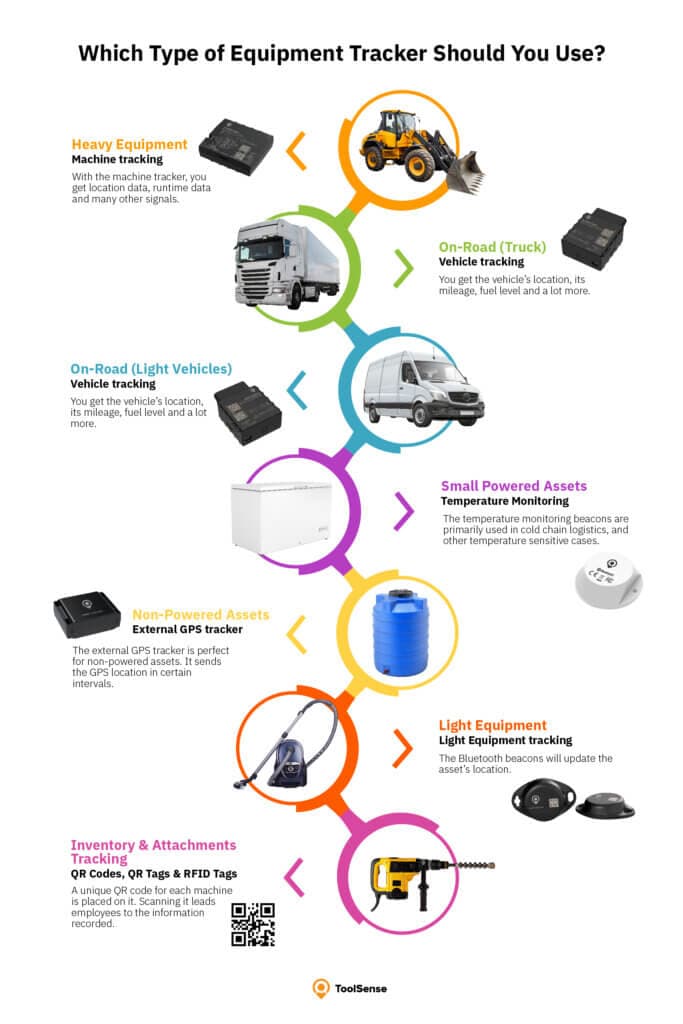
GPS trackers for equipment fit these kinds of assets:
- Heavy and mid-sized equipment or machinery
- On-road vehicles for light and heavy goods
- Small powered equipment
- Non-powered equipment
Tracker Types: Bluetooth Trackers
Bluetooth sends and receives data across 79 short-range radio frequencies. Two Bluetooth-enabled devices detect each other automatically as long as they're in range, and that range runs from 10 to 100 metres depending on the device class.
The standout benefit of Bluetooth trackers is battery life — the technology sips power, so a tag can run a long time between replacements. They also tend to be small and rugged, which makes them easy to fix onto smaller assets that have no power supply of their own. The catch is range. The asset has to stay within a set distance, so Bluetooth won't track anything across a large area or over real distance.
Bluetooth trackers work best on equipment like:
- Mid-sized and heavy machinery and equipment (over short distances)
- Light equipment
- Small assets, such as IT hardware
Tracker Types: QR Codes or RFID Tags
A QR code or QR tag is a small two-dimensional code, close cousin to a barcode, that a smartphone or dedicated scanner can read. The grid of bars and dots holds information about the asset; scan it with a phone, tablet, or reader, and that information is translated back out. Every code is unique, so you can assign one to each asset.
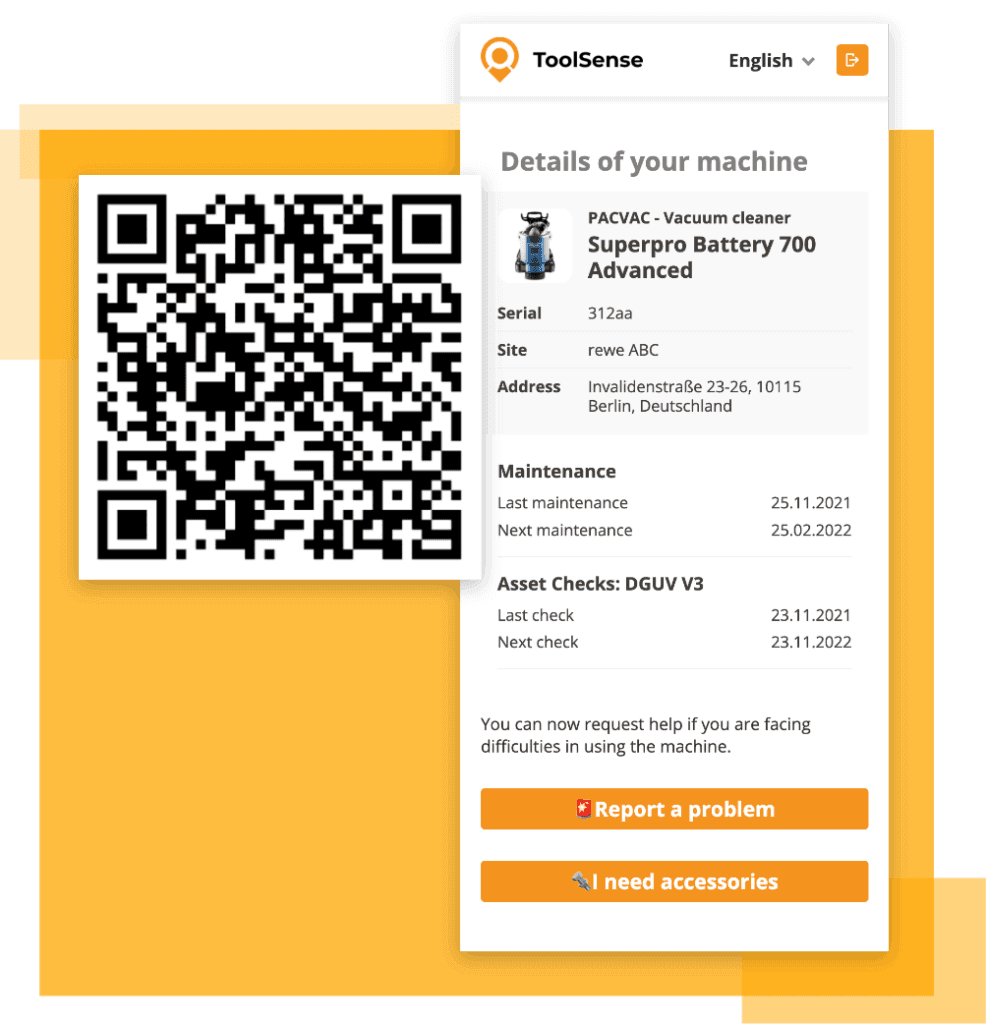
RFID — radio frequency identification — uses radio waves instead. You need an RFID tag plus a reader to pull the information off it. It works over short distances without direct contact between tag and reader, and where the magnetic field is clear of interference, that distance can stretch up to 1000 metres.
Both QR codes and RFID tags are tiny and need no battery, so you can stick them on practically anything — cheap inventory and high-value gear alike. They go almost anywhere on a piece of equipment, even something the size of a tablet, stay out of the way, and are simple to generate with the right asset tracking system or software. They also work on non-powered assets and inventory. The downside is that they don't transmit data on their own; someone has to scan them. That leaves room for human error — assets get mixed up, or a code never gets scanned at all. RFID has the edge here: it scans large batches of assets faster and holds up better than QR codes over time.
QR codes and RFID tags are most convenient on assets like:
- Stationary assets
- Mid-sized mobile assets
- Small assets, such as IT hardware
- Inventory and attachments
Things to Consider Before Choosing Your Equipment Tracking System
Before settling on a tracker, start with two questions: what types of assets you own, and what information you want to track, and how often.
Small assets like inventory or IT hardware only need an occasional scan — their exact location at every moment isn't the point. QR codes and RFID tags suit these well. They're scanned by hand, give up their data on demand, and stay unobtrusive in the meantime.
Medium-sized equipment that stays within a small radius is a better match for Bluetooth trackers. Their long battery life means fewer replacements, and they're well suited to periodic scanning or keeping tabs on assets inside a contained area like a construction site or a company building.
High-value or mobile assets are where GPS trackers earn their keep and where the protection against theft matters most — think a fleet of delivery trucks or construction equipment shuttling between sites, which is exactly where dedicated fleet management tooling pays off. You can track these assets worldwide and with high accuracy, the lone exceptions being underground or indoors. Open the app and you see where your most important equipment is right then, so it never slips off the radar.
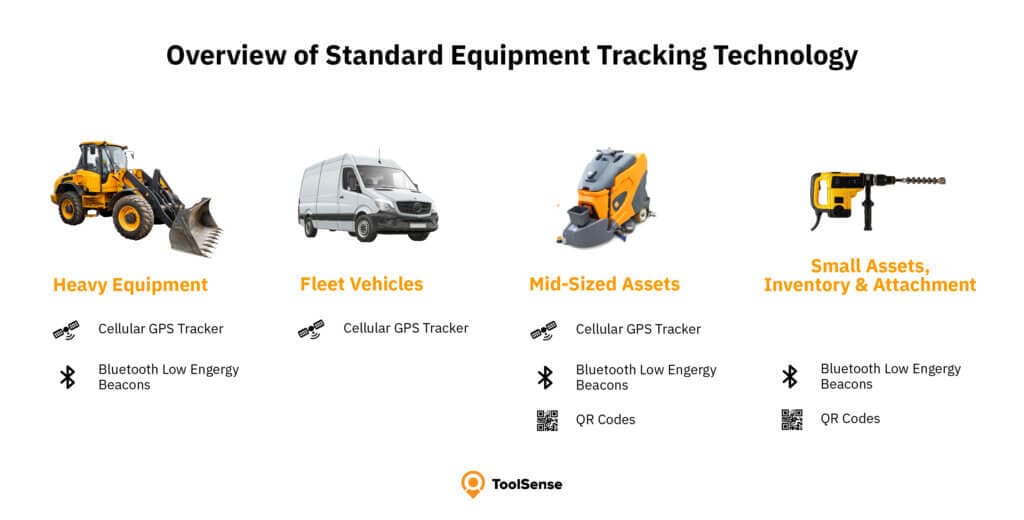
You're also not locked into a single system company-wide. Different tools and assets call for different tracking technology, so the real question isn't which tracker is right for your company — it's which one is right for each asset. More often than not, mixing devices is what saves the most time and money.
Conclusion: Combine Your Equipment Tracking System With Software From ToolSense
Whichever tracker type you land on, the hardware is only half of it — you still need reliable software to read and make sense of the data your trackers produce. ToolSense brings that side together in one asset management solution: asset tracking, geofencing, work order management, and inventory management in a single system. Because the platform is cloud-based, your team can reach it from a desk, a jobsite, or the road, on a computer, phone, or tablet. Everything they need is a few clicks away — asset location, runtime, downtime, maintenance history, and work orders, right down to recovering equipment that's been misplaced or stolen.
ToolSense offers the respective hardware, such as asset GPS trackers or Bluetooth beacons, and also makes QR code creation quick and simple. So you're never forced into one solution for a whole mixed fleet of assets. Run GPS tracking on your high-value equipment, QR codes on your inventory, and keep sight of everything at once. It all flows into a single IoT and telematics platform with analytics features you can use to get more out of every asset going forward. To compare full platforms, see our roundup of the
best equipment management software
, or — if you manage jobsite tools — our guide to construction tool tracking.
Want to dig deeper into ToolSense's tracking options first? You can find out more about our IoT hardware here.
FAQ
What is an equipment tracker?
An equipment tracker is a small device that can be attached to a vehicle, machine, or piece of equipment to track the asset’s location. Most often, these trackers utilise GPS, Bluetooth, or RFID technology.
How many types of tracking are there?
Equipment tracking technology is varied and usually relies on GPS, Bluetooth, NFC, QR code, or RFID technology.
What are the three 3 kinds of tracking?
The most commonly used types of equipment trackers use Bluetooth, GPS, or RFID technology.
What is a Bluetooth beacon?
A Bluetooth beacon works similarly to a lighthouse and often comes in the shape of a small, battery-powered transmitter. Using Bluetooth Low Energy (BLE), the wireless tracking device emits a constant signal.
What is GPS tracking?
GPS – or Global Positioning System – utilises satellites that constantly send out a signal, which is received by a GPS device. Thanks to a GPS tracker, the asset’s or person’s location can be determined.
What does GPS + cellular mean?
GPS stands for Global Positioning System and uses satellites to determine an asset’s or person’s position. These satellites send out signals which are picked up by a GPS-capable device, such as a GPS tracker or smartphone.