Equipment Management
Every operation has a handful of machines it cannot run without. Identifying which ones might be straightforward, or it might mean a real shock the first time a single failed part takes the whole line down. Keeping those assets healthy is a different job from simply knowing they matter, and most companies underestimate how much deliberate care it takes.
That is where ToolSense comes in. More than 250 companies use it to monitor, maintain, and manage the equipment their operations depend on. Here is how that works in practice.
Key Facts
- Critical assets are those assets that are essential to your operation. If they fail, they negatively impact your ability to generate revenue or reach your company’s goals.
- Critical equipment can also be classified as equipment that, in case of failure, poses a safety and environmental risk.
- In contrast, non-critical assets do not affect your overall productivity in case of equipment failure.
- To determine which assets are critical, you can calculate the impact failure would have on your business or conduct a bottleneck analysis.
- It is important to maintain your critical equipment to avoid failure in the first place.
- Asset management software like ToolSense can help you monitor and maintain your assets diligently.
Determining the Criticality of an Asset
What Are Critical Assets?
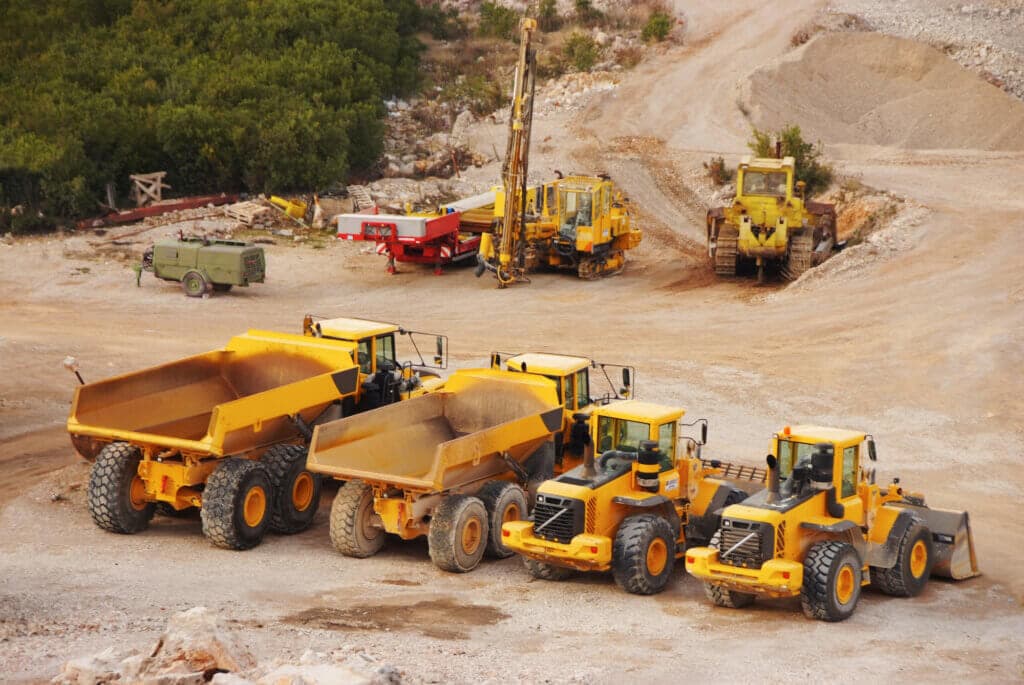
Critical assets, sometimes called critical equipment, are the assets your organisation needs to maintain operations and reach company goals. When one is degraded, broken, or unavailable, the reliability of your whole operation takes a hit. What counts as critical varies from one organisation to the next, shaped by the type of business and how it runs day to day.
What Is a Criticality Analysis?
Working out which assets are genuinely critical looks a little different for every business. Still, there are two main paths to get there.
The first is to run a criticality analysis that calculates the effect an asset’s failure would have on your operation. This shows you which failures carry the heaviest consequences and what level of failure your day-to-day business can still tolerate. As a rule, when a failure dents customer satisfaction and loyalty or drags down overall productivity, the asset behind it is critical.
A bottleneck analysis takes the second path. Here you map out which assets your daily workflow actually depends on. If an asset has to be fully operational for the operation to run, treat it as critical, because losing it slows down everything downstream.
Don’t overlook equipment whose failure would be catastrophic in ways that go beyond productivity, threatening your employees’ health and safety or the environment. Safety-critical items such as fire extinguishers and first aid kits are good examples; you can review the relevant terms in our glossary.
A failure modes and effects analysis takes this further. By systematically identifying which assets could fail, what might cause it, and what risk that poses, you learn a great deal about how important each asset really is. Once the analysis is done, you can calculate each asset’s risk priority number, a numeric criticality assessment of a failure mode. You rate the severity of a failure mode, the probability of its occurrence, and the likelihood of detection on a scale of 1 to 5 or 1 to 10, then multiply the three ratings together to get the number.
Classifications of Assets by Criticality
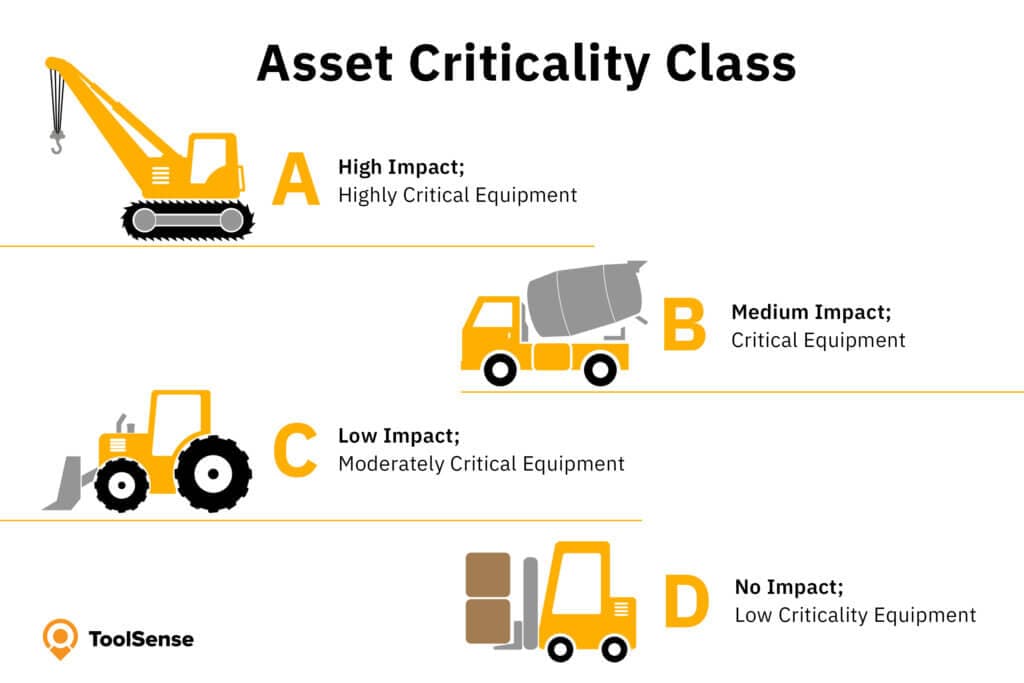
Criticality A
These assets are your top priority, full stop. Failure shuts down the entire operation or several production lines at once. Criticality A also covers safety and environmental concerns, highly profitable equipment, and anything with steep repair costs.
Criticality B
If the equipment can be bypassed for a short period of time or run at reduced capacity, the assets are equipment criticality B.
Criticality C
Asset criticality C can also be called comfort items. Equipment assets, such as heating or air conditioning, fall under this category.
Criticality D
If an asset is grouped as criticality D, it is either not directly involved in the operation or has no impact on it due to redundancy.
How to Treat Critical Assets
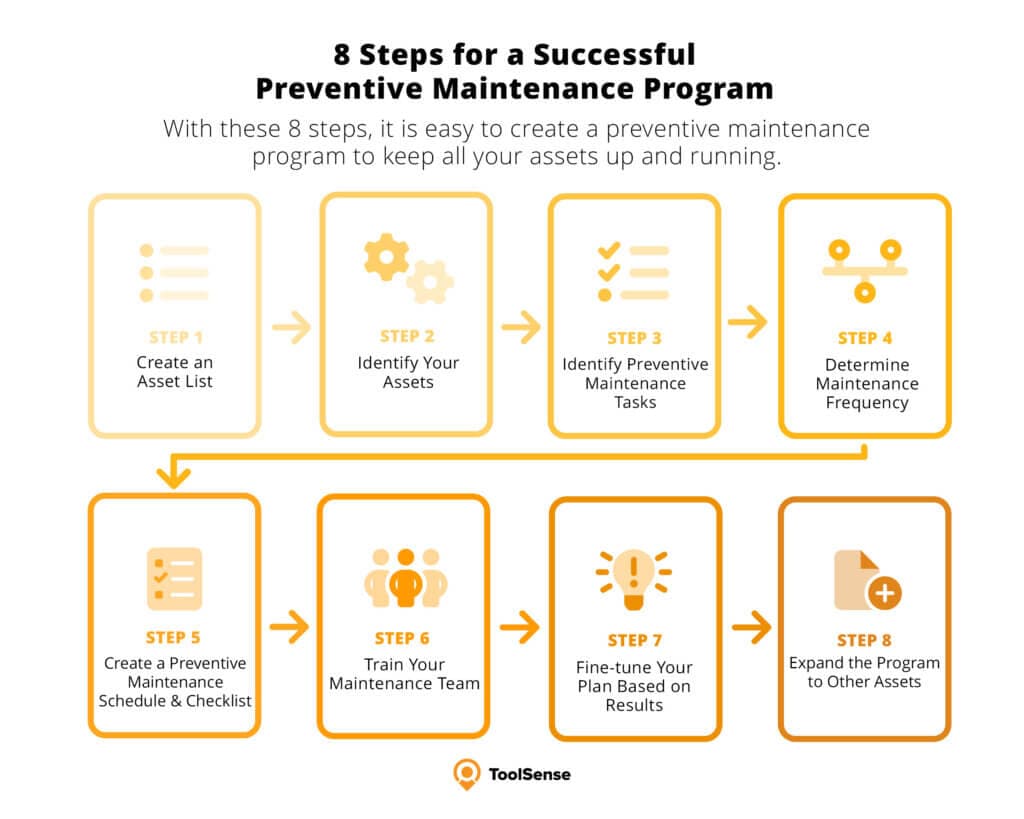
Maintenance Scheduling
Maintenance – especially
preventive maintenance
– belongs at the centre of your whole non-critical and critical
asset management strategy
, and every asset should be maintained to some standard. Critical assets, though, deserve priority: keep them in the best possible shape so failure never gets the chance to start.
Asset Replacement
The same priority applies when you set a maintenance programme and budget. Put more money into maintaining and replacing the equipment your operation can’t run without than into non-critical assets, and replace critical assets and spare parts before they fail rather than after.
Lifecycle Costing
Tracking an asset’s lifecycle gives you a clear picture of its cost of ownership – everything it takes your company to keep that specific piece of equipment running. That number feeds your budgeting and your maintenance cost estimates, and it sharpens the call on whether to repair or replace an asset or one of its parts.
Failure Analysis
Industrial equipment fails. With the right failure analysis and a solid risk matrix, you can trace how assets have failed before and predict how they might fail next, which gives your company a clearer guide to the maintenance tasks that prevent it. Failure analysis is time-consuming and costly, though, so reserve it for your most critical assets.

Benefits of an Asset Criticality Analysis
When you want to tighten up your maintenance programme and make maintenance scheduling more efficient, an asset criticality analysis pinpoints exactly which critical equipment needs work and where its weaknesses sit. The payoff includes:
- Identification of failure risks and consequences of equipment failure
- Overview of critical assets
- Reduction of machine downtime
- Improvement of maintenance scheduling
- Optimisation of spare part use and availability
- More efficient workflows and resource planning
- Prolonged asset lifetime
- Increased workplace safety
Recommendation for High-Risk Facility Assets
A few measures help keep high-risk and critical key assets in top condition. The core idea is to assess equipment during the preventive maintenance process and decide what to do from there. Several methods support this:
Thermography
Thermography captures heat-distribution images that reveal whether equipment, or specific parts of it, is overheating. Many mechanical and electrical assets run hotter as they head toward failure, so a rising heat signature is a reliable warning of a malfunction.
Vibration Analysis
Rotating equipment, such as motors, fans, or gearboxes, can become unbalanced or misaligned before breaking down, which is why a vibration analysis can detect flaws before they lead to machine downtime.
Eddy-Current Analysis
As a non-destructive testing (NDT) inspection method, Eddy-current testing can be used for material identification or to determine material and coating thickness.
Ultrasound Inspection
Maintenance teams use ultrasound methods to inspect density, flow, or thickness.
Meter-Based Maintenance
With meter-based maintenance, tasks kick in once a machine has run a set number of hours or a vehicle has covered a set number of kilometres.
Tribology
Tribology is the science and engineering of interacting surfaces in relative motion. It covers friction, lubrication, and wear – all signals maintenance teams read to judge the state of an asset.
How ToolSense Asset Management Software Can Help
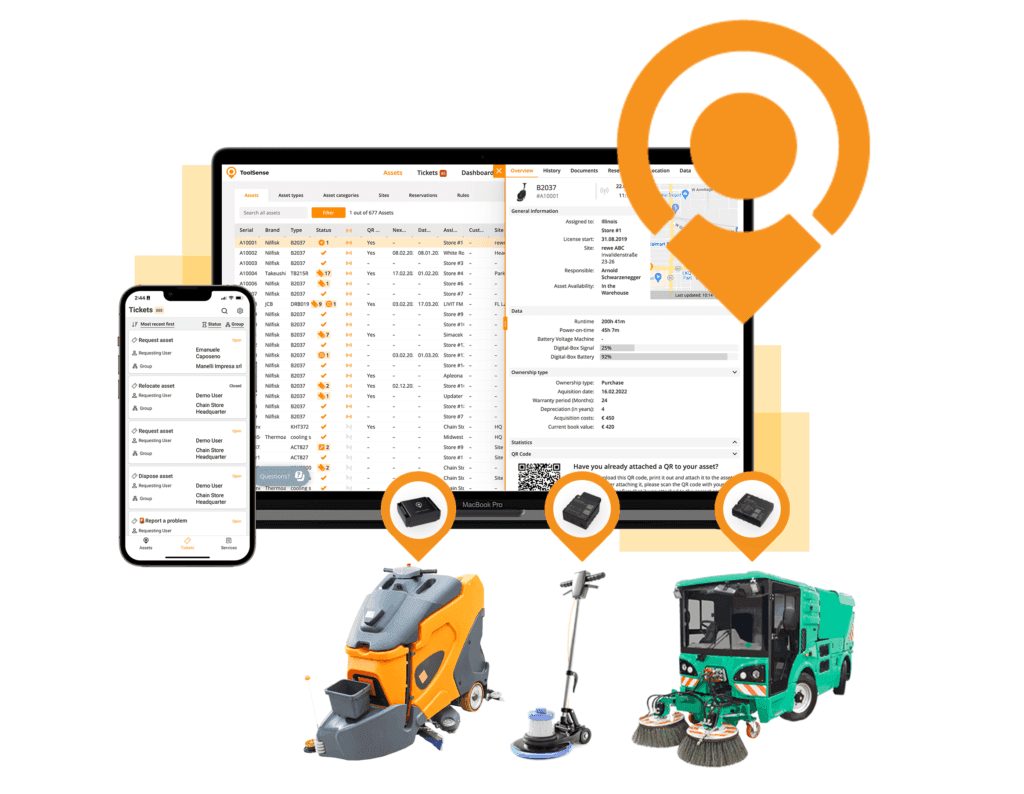
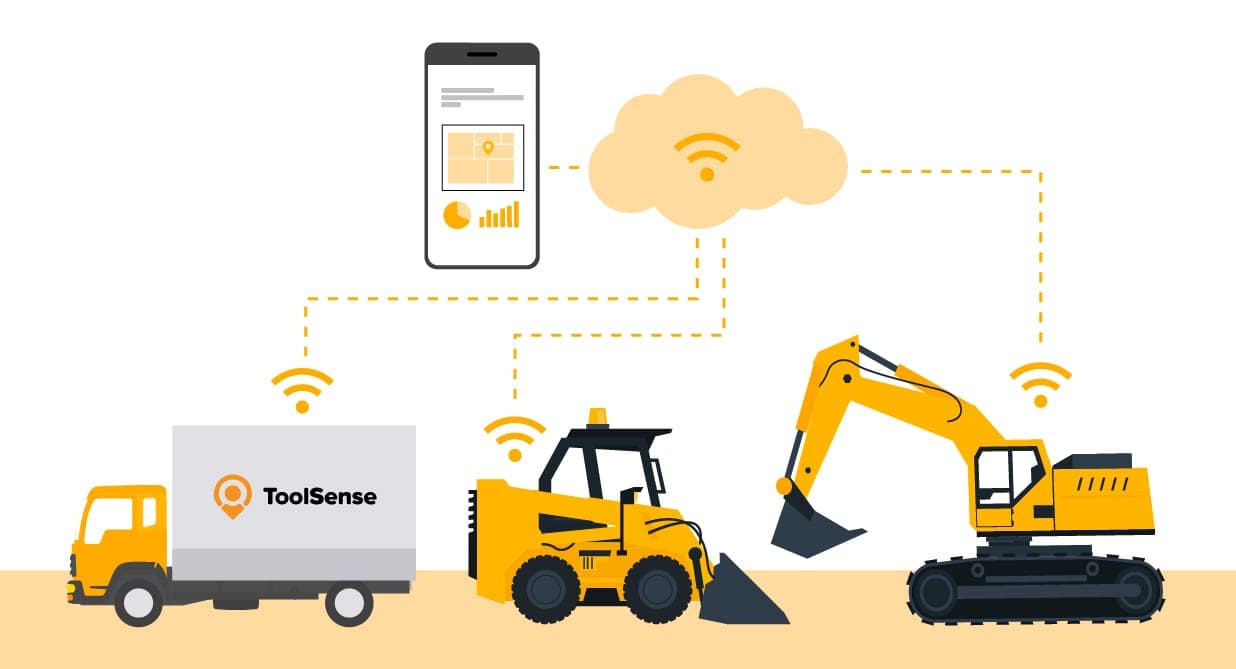
ToolSense is an asset and maintenance management solution built to monitor and optimise your critical equipment. A simple Excel import brings every asset, critical and non-critical alike, into one platform, with every piece of information you need stored in a single place. Each asset gets a lifecycle folder holding the data that matters: runtimes, downtime, maintenance history, work orders, invoices, instructions, images, and videos. Because the platform is cloud-based, your team can reach what they need from a desk, on the move, or working remotely – all it takes is a computer, smartphone, or tablet.
The platform handles critical asset monitoring and equipment tracking through a sensor, GPS tracker, or simple QR code solution. When equipment is too small or awkward for larger trackers, employees scan the machine’s unique QR code to log usage or record a maintenance task. Setting up maintenance reminders and issuing work orders takes seconds, and managing spare part inventory and orders stays simple for everyone involved.
Conclusion: Benefits of Equipment Criticality Identification and Analysis
Critical assets carry your business, and their failure hits hard – on revenue, on employee safety, or both. So the first job is figuring out which assets are critical, because you can’t maintain them properly until you know. Once you do, you understand your operation, your equipment, and how to get the most out of it. From there you can optimise the maintenance schedule and workflow, which extends machine lifespan and keeps people safer. Less downtime means you run leaner and more economically.
FAQ
Under what circumstances is an asset critical?
Critical equipment and critical assets can be identified by calculating the consequences the asset has on the entire operation in case of failure. Alternatively, a bottleneck analysis can help pinpoint assets that impact a company’s productivity.
What are non-critical assets?
Non-critical assets – also called non-critical equipment or instruments – don’t have an effect on a company’s productivity and ability to generate revenue in case of failure.
How do you define the criticality of an asset?
There are four groups of critical equipment – ranging from Criticality A (critical assets) to Criticality D (non-critical equipment). Depending on how vital an asset is to the overall operation, it can be placed in one of these four categories.
What is a critical equipment list?
Once you have agreed on what assets are critical to your operation, a critical equipment list summarises all those assets to give you a better overview.